
Water in your basement after rain — Des Moines
How long after the rain the water appears is the most useful free diagnostic you have — and in Des Moines the answer is usually "almost immediately", which is good news.
Who handles water after rain in Des Moines, IA?
Des Moines Basements diagnoses rain-triggered basement water in Des Moines by timing and entry point — separating surface-water problems, which are often inexpensive to fix, from hydrostatic pressure, which needs drainage. Call (515) 676-4747.
- Typical cost: $3,000–$12,000 in Polk County
- Soil: Clarion-Nicollet-Webster on the Des Moines Lobe — ~60% aquic, drains poorly
- Frost depth: 42" — footings and discharge lines must sit below it
- Code: Iowa Residential Code, based on the International Residential Code and adopted with Iowa amendments
- Service area: Des Moines and 9 surrounding counties, 45-mile radius
Within the hour means surface water
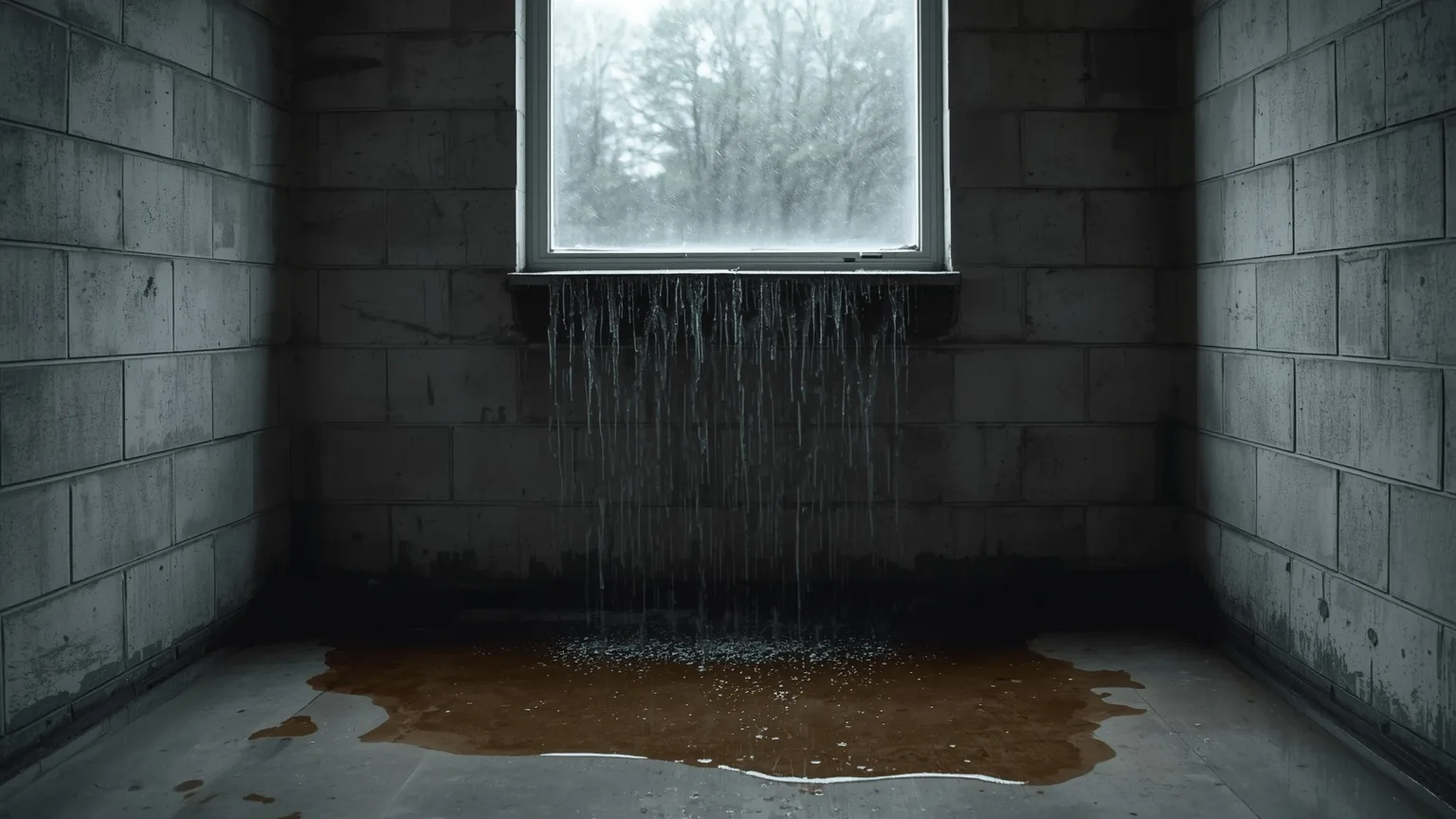
Water appearing within an hour of rain has not travelled through soil, because soil is far too slow. It arrived over the top of the foundation, down a wall from a downspout discharging at the house, or through a window well with no working drain.
That is the cheap end. Grade should fall six inches over the first ten feet away from the house. Downspouts should discharge well clear of the foundation — further than most are, and further still on ground this flat. Window wells need gravel and a functioning drain. Together these resolve a large share of Central Iowa complaints for a few hundred dollars.
A day later means the water table
The delayed pattern means something different. Water showing up a day or two afterwards, or steadily through a wet fortnight with no single storm to blame, means the ground itself has filled and the water table is now higher than your slab. Surface work will not touch that.
The Des Moines pattern skews heavily toward the first case. Because the landscape is flat and internally drained, the failure mode is usually a storm arriving faster than the lot can shed rather than a slow seasonal rise. That is worth knowing before you accept a five-figure quote — the odds are better here than in most markets that the cheap fix is the right one.
Keep a note by the basement door. Date, roughly how much rain, and how long before water appeared. Three entries is usually enough to settle it, and it converts a contractor's opinion into a diagnosis you can check.
Why Central Iowa ground drives this
Polk County sits on the Des Moines Lobe — the youngest glacial landscape in Iowa, left by ice that retreated only about 12,000 years ago. The soils are the Clarion-Nicollet-Webster association: Clarion well drained on the rises, Nicollet somewhat poorly drained on the slopes, and Webster poorly drained in the low ground. Roughly 60 percent of the landscape is classed as aquic — wet by default.
Because the Lobe is so young, natural drainage networks have not had time to cut. Relief across much of the metro is under five metres, and water that lands here does not run to a stream — it sits until it soaks in or evaporates. Saturated till backfill can exert well over 1,000 lb of lateral force per linear foot against a foundation wall — but in Des Moines the more common failure is volume rather than pressure: more water arriving in an hour than the ground can take in a day.
Central Iowa is dotted with prairie potholes — closed depressions with no outlet at all. Most were tile-drained and built over as the metro expanded, and a house sitting in a filled pothole is sitting in a bowl. The confluence of the Des Moines and Raccoon rivers keeps the water table shallow through the older river-adjacent neighborhoods. In the older core neighborhoods the problem compounds — des moines' older neighborhoods — sherman hill, drake, beaverdale, the east village — carry a large stock of pre-1940 housing on block and rubble foundations built before perimeter drainage was required.
Water After Rain questions
Why does my basement only get water after heavy rain?
Because rain of that size exceeds whatever margin your lot currently has — a downspout discharging too close, grade that runs the wrong way, a window well with a blocked drain. The diagnostic question is not whether it rained but how quickly the water followed, because that separates a surface problem from a groundwater one.
Can extending my downspouts really fix it?
Often, and it should always be tried first. A single downspout dumping at the foundation can deliver thousands of gallons to one spot over a summer, and on flat ground that water does not disperse. Extending discharge well clear and correcting grade is cheap, reversible, and resolves a real share of Des Moines cases before any drainage work is warranted.
What if I have both patterns?
Then you have both, which is common on older properties. Fix the surface issues first because they are cheap and reduce the load. Re-observe through a full storm season. If water still appears on the delayed pattern once surface water is controlled, the remainder is hydrostatic and needs interior drainage.
Related emergency services
Flooded Basement Cleanup
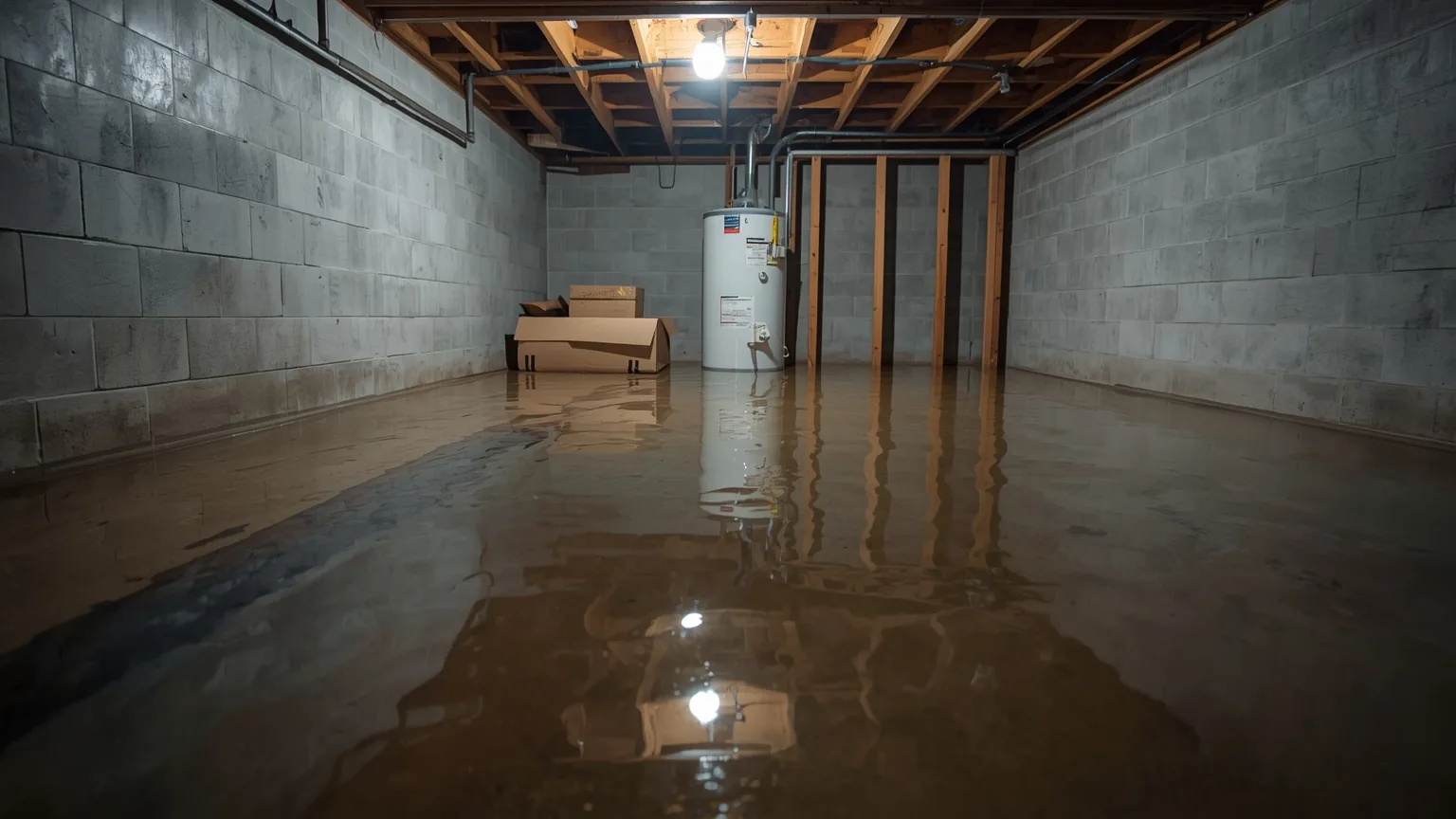
In Des Moines a flooded basement is usually a storm event, not a slow seasonal failure. It arrives in an afternoon, and what you do in the first few hours decides how much of it you keep.
Basement Mold & Odor
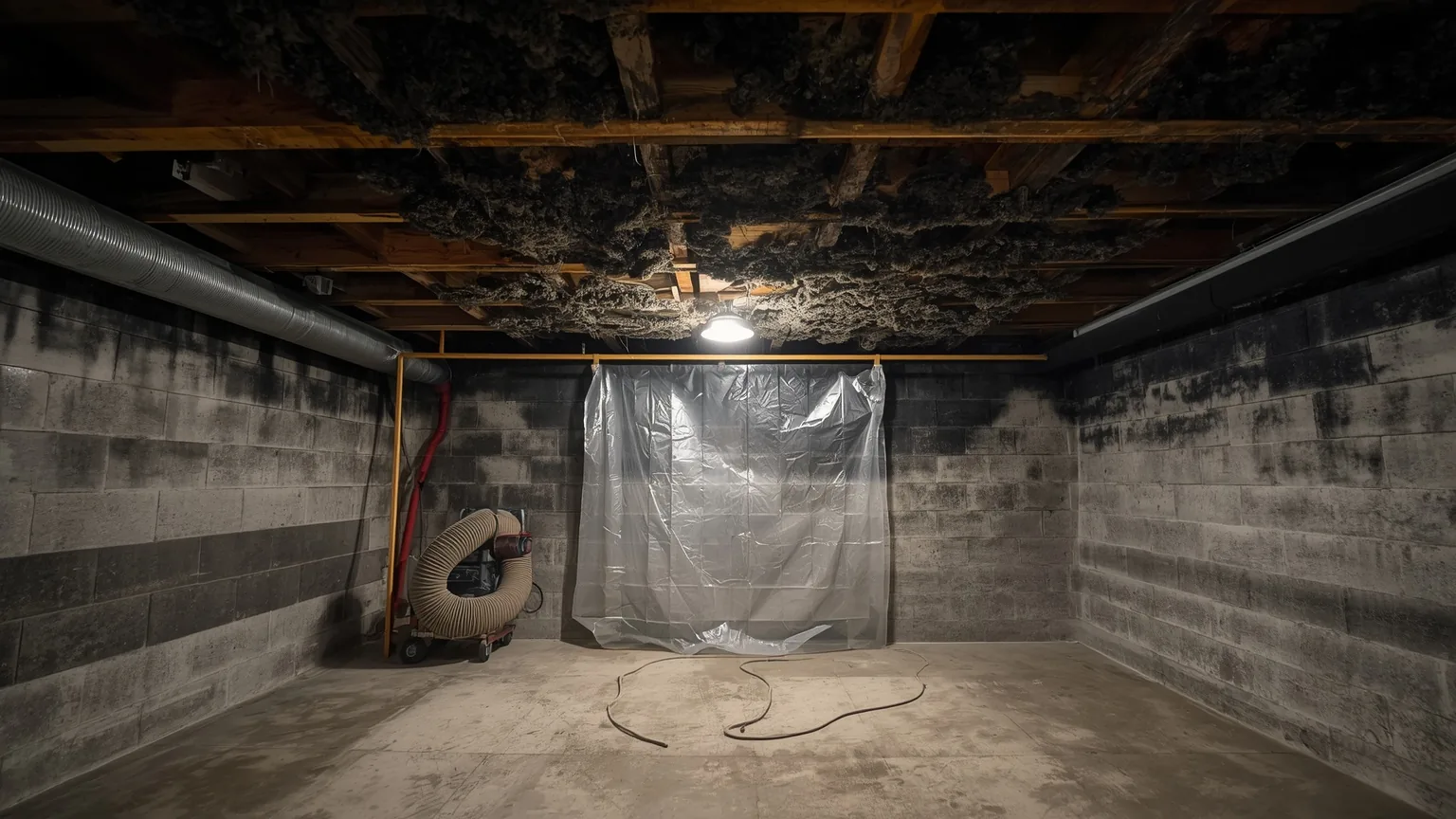
Mold is a symptom with a marketing department. The organism needs water and something organic — take away the water and the problem is solved; take away only the organism and you have scheduled a repeat.
Find out what's actually causing it.
A free on-site inspection and a written scope — before any work is quoted.