
Bowing basement wall repair in Des Moines
A bowing basement wall means the ground outside is winning. On the Lobe the load is intermittent rather than constant — but Iowa's freeze-thaw cycle makes sure none of the ground gained is ever given back.
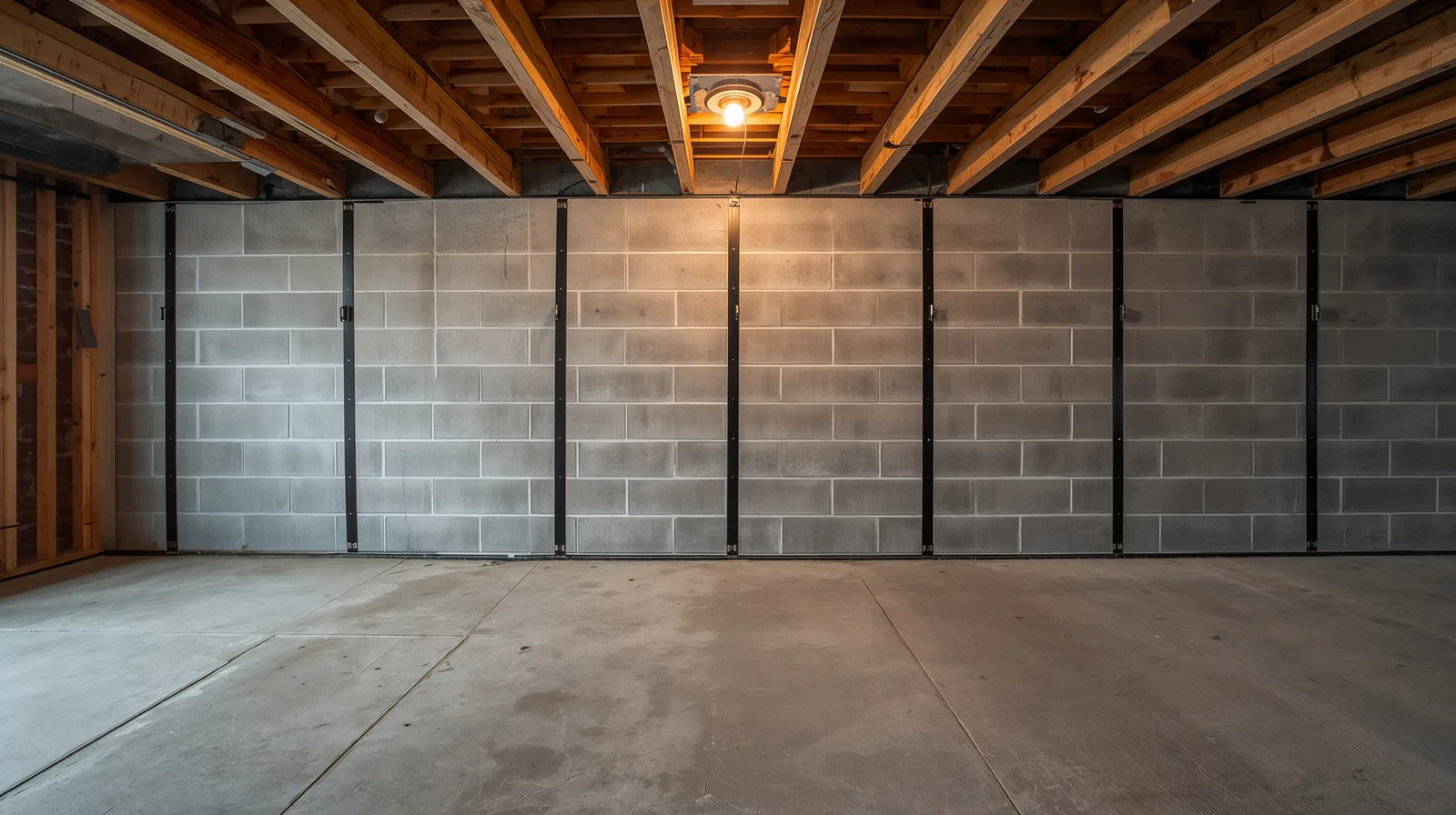
Who handles bowing & basement wall repair in Des Moines, IA?
Des Moines Basements stabilizes bowing and cracked basement walls in Des Moines with carbon fiber straps, wall anchors, or steel I-beam bracing, selected by how far the wall has deflected and what yard access exists. Call (515) 676-4747.
- Typical cost: $4,000–$15,000 in Polk County
- Soil: Clarion-Nicollet-Webster on the Des Moines Lobe — ~60% aquic, drains poorly
- Frost depth: 42" — footings and discharge lines must sit below it
- Code: Iowa Residential Code, based on the International Residential Code and adopted with Iowa amendments
- Service area: Des Moines and 9 surrounding counties, 45-mile radius
Why Des Moines block walls bow
Till backfill takes water during a wet stretch and swells, pushing against the wall. Saturated backfill can exert well over 1,000 pounds per linear foot, and an 8-inch block wall from the 1950s was never designed for it. The classic evidence is a horizontal crack along a mortar course near mid-height, often held closed by the wall's own weight and unnoticed for years.
What makes it progressive here is winter. With frost driven to 42 inches, water in the backfill and in the wall's own cracks freezes well down the wall, expands, and gives back slightly less each spring. The wall moves in a ratchet — a little more every year, never returning.
Choosing the repair
How far the wall has already moved determines what can be done about it. Under about two inches, carbon fiber straps bonded to the block hold it — flat, paintable, no floor space lost. Past two inches the load needs steel, which means bracing between slab and joists and a few inches of the room given up.
Wall anchors tie the wall back to a plate buried in undisturbed soil in the yard, and they are the only method that can gradually pull a wall back toward plumb. They need yard access and stable bearing ground, which is a real constraint on the tighter lots in the older neighborhoods and on lots where the surrounding ground is filled rather than native.
Every one of these stops the wall moving. None of them stops the water that moved it. On a Des Moines lot that means drainage belongs in the same scope, because the backfill will load again with the next wet stretch and a braced wall under continuing load is a repair with a countdown on it.
Why Central Iowa ground drives this
Polk County sits on the Des Moines Lobe — the youngest glacial landscape in Iowa, left by ice that retreated only about 12,000 years ago. The soils are the Clarion-Nicollet-Webster association: Clarion well drained on the rises, Nicollet somewhat poorly drained on the slopes, and Webster poorly drained in the low ground. Roughly 60 percent of the landscape is classed as aquic — wet by default.
Because the Lobe is so young, natural drainage networks have not had time to cut. Relief across much of the metro is under five metres, and water that lands here does not run to a stream — it sits until it soaks in or evaporates. Saturated till backfill can exert well over 1,000 lb of lateral force per linear foot against a foundation wall — but in Des Moines the more common failure is volume rather than pressure: more water arriving in an hour than the ground can take in a day.
Central Iowa is dotted with prairie potholes — closed depressions with no outlet at all. Most were tile-drained and built over as the metro expanded, and a house sitting in a filled pothole is sitting in a bowl. The confluence of the Des Moines and Raccoon rivers keeps the water table shallow through the older river-adjacent neighborhoods. In the older core neighborhoods the problem compounds — des moines' older neighborhoods — sherman hill, drake, beaverdale, the east village — carry a large stock of pre-1940 housing on block and rubble foundations built before perimeter drainage was required.
Bowing & Basement Wall Repair questions
How much does bowing wall repair cost in Des Moines?
Polk County bowing wall work runs $4,000 to $15,000. Wall length, deflection and the method that deflection dictates set the figure — carbon fiber at the bottom of the range, anchors or full-height steel at the top.
How much bowing is too much?
Two inches of deflection is roughly where carbon fiber stops being appropriate and bracing or anchors take over. But rate matters as much as the number — a wall that moved half an inch this year is more urgent than one that moved two inches over thirty years and stopped. Measure with a string line, write the date on it, and measure again in six months.
Can a bowed wall be pushed back straight?
Anchors can, slowly — tightened in stages across several months, usually with the outside soil dug back to take the pressure off first. Straps and braces are not designed to move a wall; they hold it. Treat a same-day promise to straighten a badly bowed wall as a reason to get another quote.
Is a bowing wall an emergency?
It depends on degree and rate. A hairline horizontal crack with no measurable bow needs monitoring and a plan. Two or more inches of deflection, visibly widening cracks, or block beginning to shear at the joints needs assessment now — and if it moved noticeably in one season, before the next wet stretch rather than after.
Related foundation services
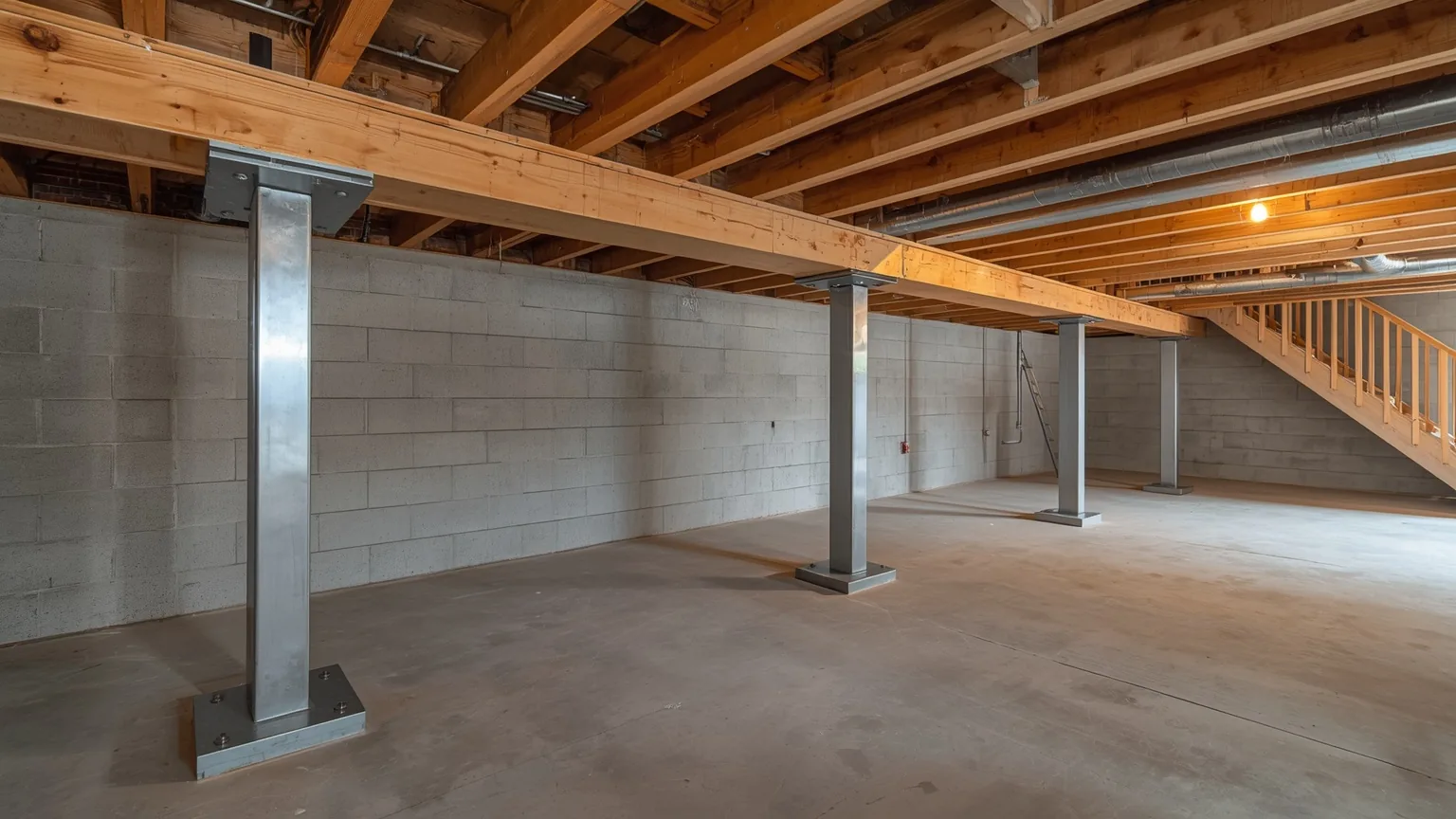
Foundation Repair
Foundation problems in Central Iowa come from two directions: lateral load from saturated till, and footings settling into ground that was never as stable as it looked.
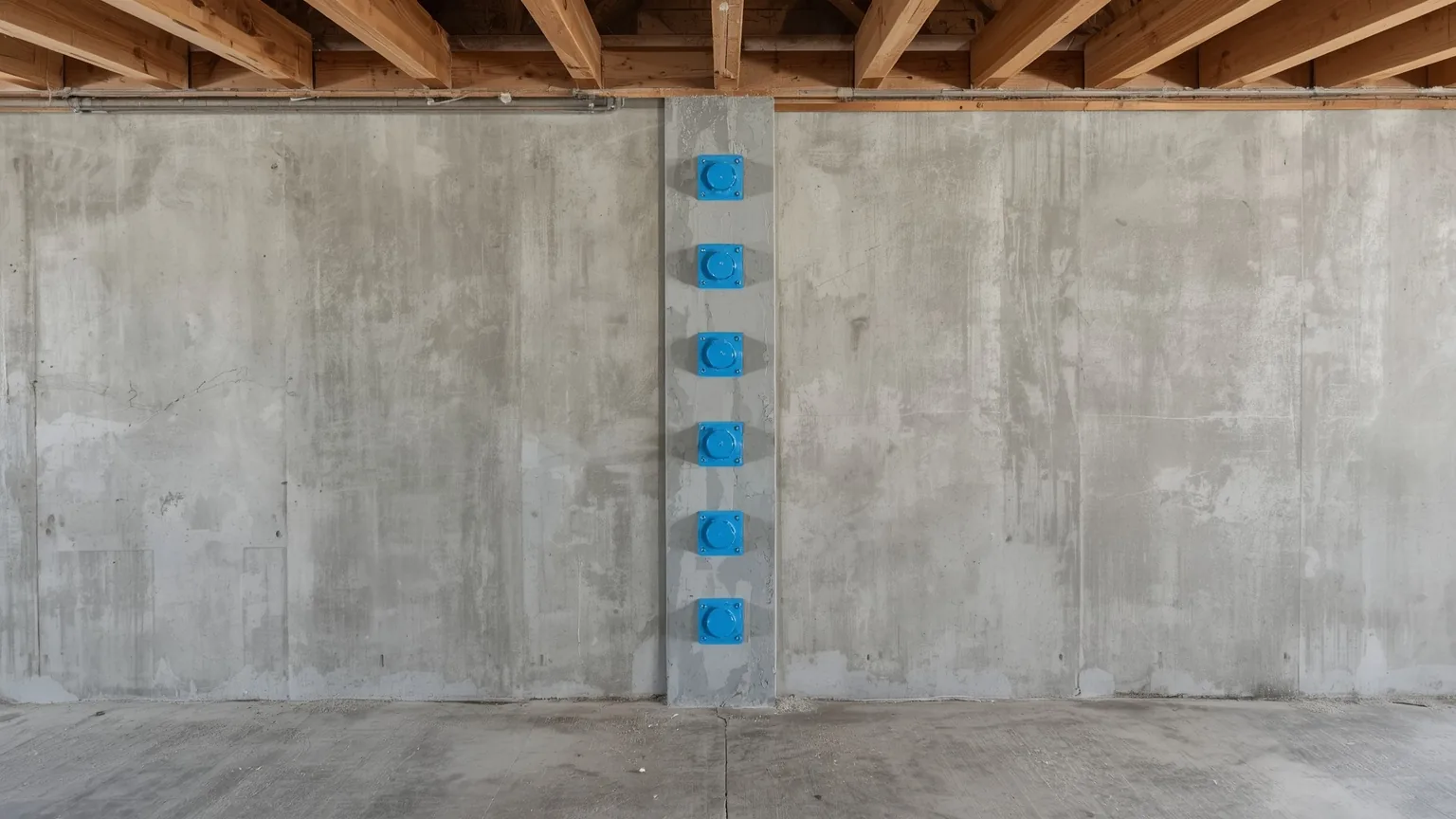
Foundation Crack Repair
Width, direction and movement tell you everything. A hairline running vertically down a poured wall is the concrete relieving its own curing shrinkage. A crack tracking horizontally along a mortar bed is the ground outside winning.
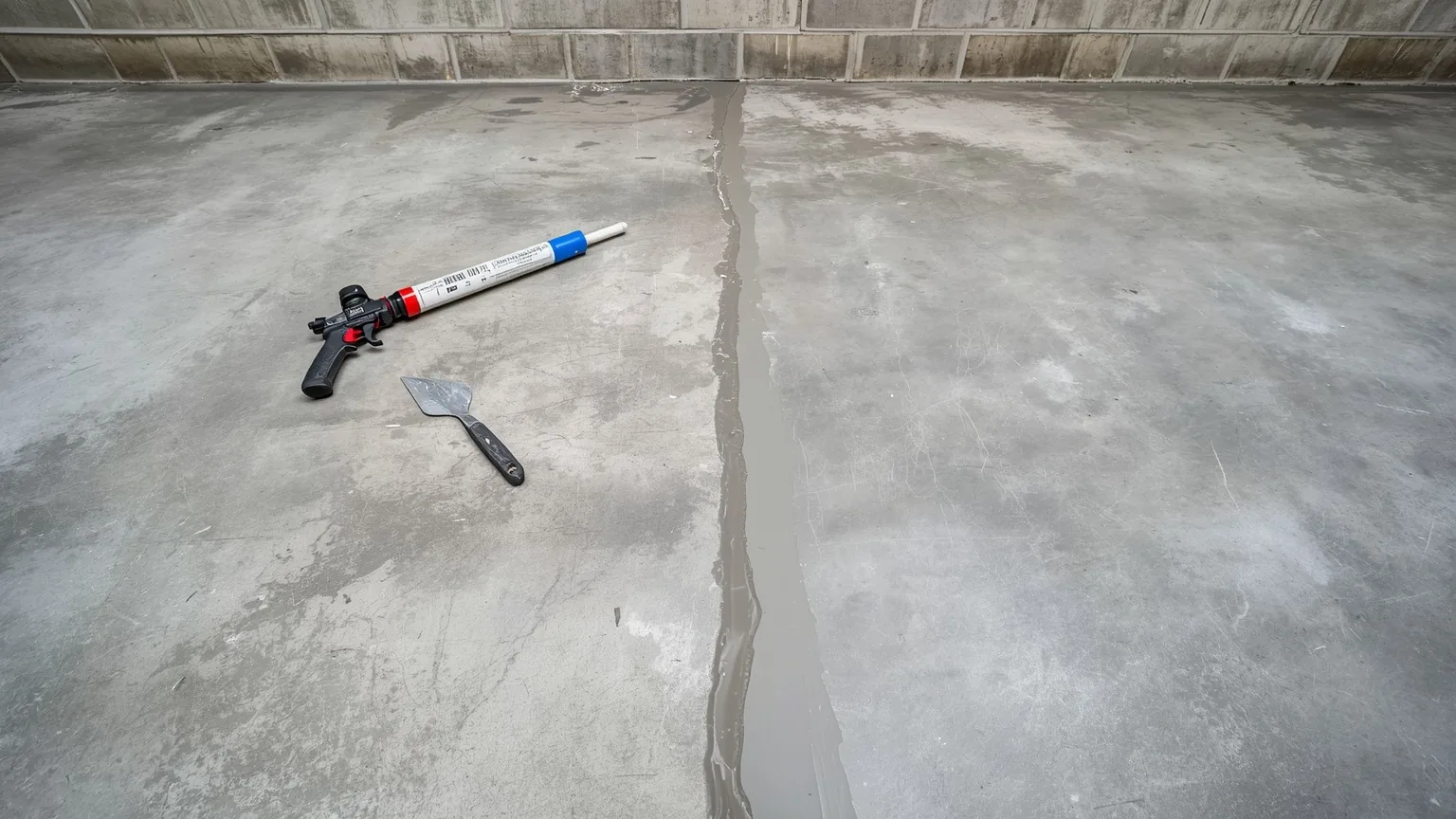
Basement Floor Crack Repair
Most basement floor cracks are harmless shrinkage. The ones that matter have a lip — and on the Des Moines Lobe that usually means the slab is bridging ground that settled unevenly.
Find out what's actually causing it.
A free on-site inspection and a written scope — before any work is quoted.