
French drain installation in Des Moines
On flat Des Moines Lobe ground, water does not run off — it waits. A French drain gives it somewhere to go that is not your foundation.
Who handles french drain installation in Des Moines, IA?
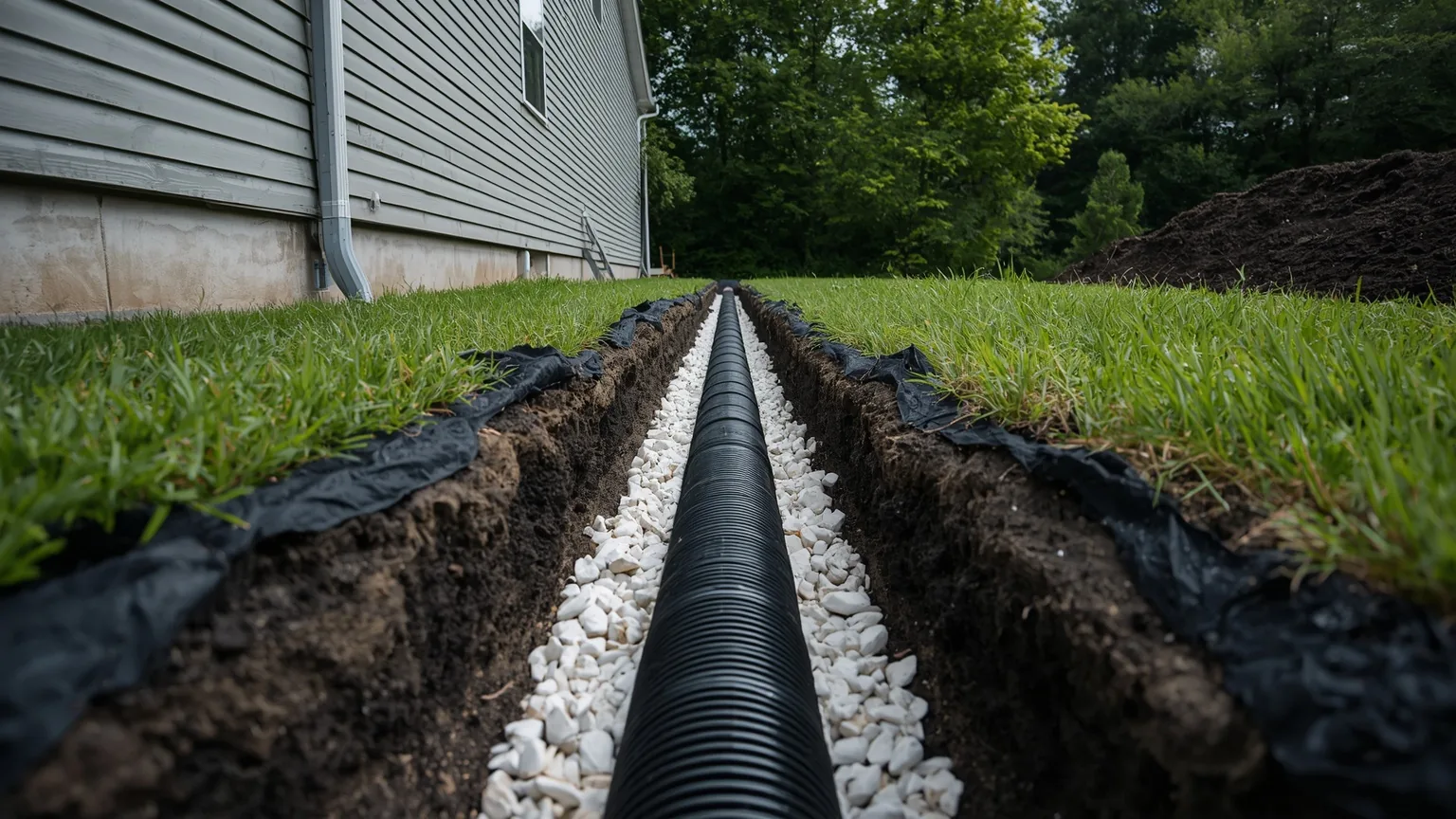
Des Moines Basements installs exterior French drains and yard drainage across Des Moines — perforated pipe in washed stone with filter fabric, pitched to daylight, sized for Polk County's low-permeability clay. Call (515) 676-4747.
- Typical cost: $2,500–$8,000 in Polk County
- Soil: Clarion-Nicollet-Webster on the Des Moines Lobe — ~60% aquic, drains poorly
- Frost depth: 42" — footings and discharge lines must sit below it
- Code: Iowa Residential Code, based on the International Residential Code and adopted with Iowa amendments
- Service area: Des Moines and 9 surrounding counties, 45-mile radius
What a French drain actually does
A French drain is a trench, washed stone, perforated pipe and a fabric wrap. Water takes the path of least resistance, which is the stone, and travels the pipe to somewhere it can be released. It intercepts and redirects; it does not dry a yard out.
Whether one belongs on your lot depends on where the water is coming from. If it is surface water sheeting off a neighbouring property, runoff collecting in a low spot, or a saddle between rises that fills during a storm, interception works well. If your basement is taking water because the whole area's water table came up after a wet stretch, an exterior trench will not lower it and interior drainage is the honest answer.
Where it belongs
Two placements earn their cost here. A curtain drain uphill of the house, which matters on the sloped lots in Pleasant Hill, Johnston and Norwalk where water tracks in laterally from above. And a footing drain against the foundation itself, which is what the Iowa Residential Code describes.
Discharge is the hard part in Central Iowa and it is worth settling before the trench is dug. On ground with relief under five metres there is frequently no fall available anywhere near the house, and a drain that discharges into ground as impermeable and as flat as the ground it drains has achieved nothing. Any competent quote states where the water ends up, and if it cannot, it should say so first.
There is a specifically Iowa complication: much of the suburban metro sits over old agricultural tile. Trenching can intersect it, which occasionally solves a problem for free and occasionally creates one by rerouting field drainage toward the house. Anyone digging here should expect to find tile and know what to do when they do.
Why Central Iowa ground drives this
Polk County sits on the Des Moines Lobe — the youngest glacial landscape in Iowa, left by ice that retreated only about 12,000 years ago. The soils are the Clarion-Nicollet-Webster association: Clarion well drained on the rises, Nicollet somewhat poorly drained on the slopes, and Webster poorly drained in the low ground. Roughly 60 percent of the landscape is classed as aquic — wet by default.
Because the Lobe is so young, natural drainage networks have not had time to cut. Relief across much of the metro is under five metres, and water that lands here does not run to a stream — it sits until it soaks in or evaporates. Saturated till backfill can exert well over 1,000 lb of lateral force per linear foot against a foundation wall — but in Des Moines the more common failure is volume rather than pressure: more water arriving in an hour than the ground can take in a day.
Central Iowa is dotted with prairie potholes — closed depressions with no outlet at all. Most were tile-drained and built over as the metro expanded, and a house sitting in a filled pothole is sitting in a bowl. The confluence of the Des Moines and Raccoon rivers keeps the water table shallow through the older river-adjacent neighborhoods. In the older core neighborhoods the problem compounds — des moines' older neighborhoods — sherman hill, drake, beaverdale, the east village — carry a large stock of pre-1940 housing on block and rubble foundations built before perimeter drainage was required.
French Drain Installation questions
How much does a French drain cost in Des Moines?
Exterior French drain work in Polk County runs $2,500 to $8,000, driven mostly by length, depth and how far the outlet has to travel to find fall. On the flattest suburban lots the outlet run is the largest part of the price.
Will a French drain fix water in my basement?
Only if the water is reaching your wall across the surface or from higher ground. A French drain intercepts water in transit; it cannot lower a water table that has risen underneath you. If water appears at the cove joint or through the slab, the pressure is below the floor and no exterior trench will reach it.
How deep does it need to be?
For a curtain drain, deep enough to intercept the water path and below the 42-inch frost line Des Moines codes set for footings. A footing drain sits at the footing. Anything shallower is a fair-weather drain that stops working in the season you most need it.
Related drainage services
Sump Pump Installation
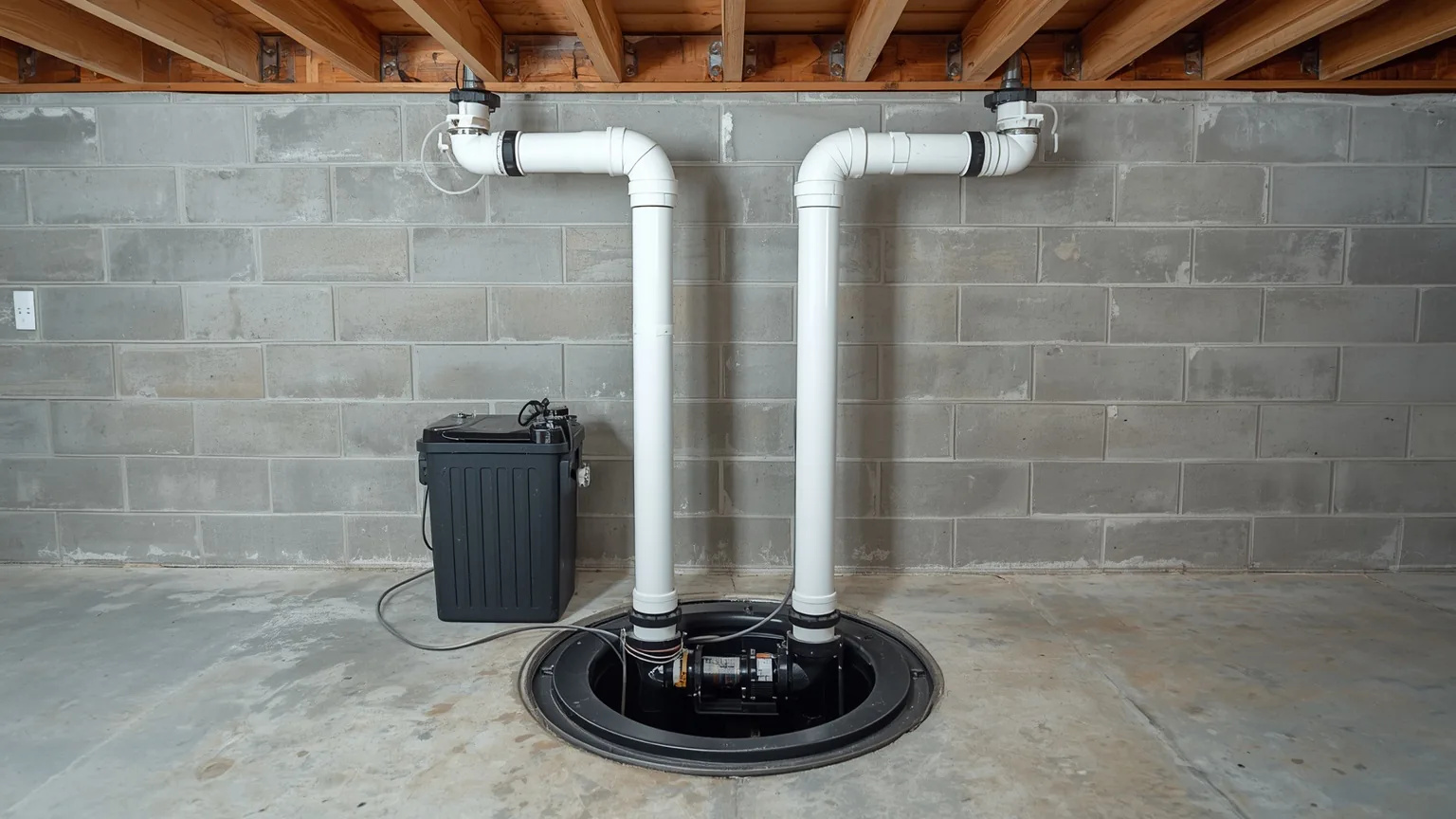
In Central Iowa a sump pump is sized for a thunderstorm, not a season. The design event is two to four inches falling in an afternoon onto ground that cannot take it.
Sump Pump Replacement
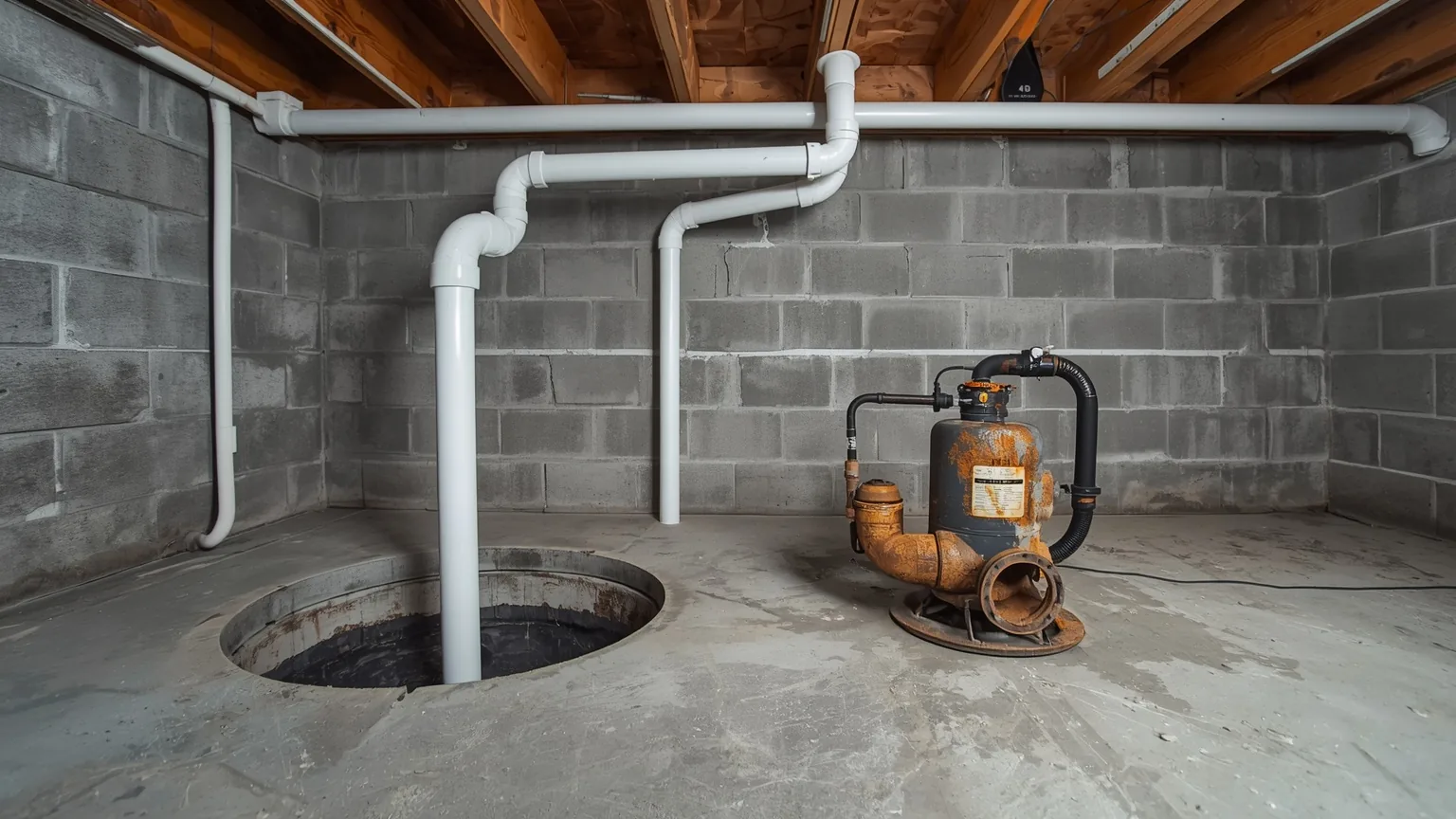
The pump that has worked fine for nine years will fail during the storm that needed it. Central Iowa concentrates a pump's entire working life into a handful of summer afternoons, which is why age beats symptoms as a replacement trigger.
Basement Drainage Systems
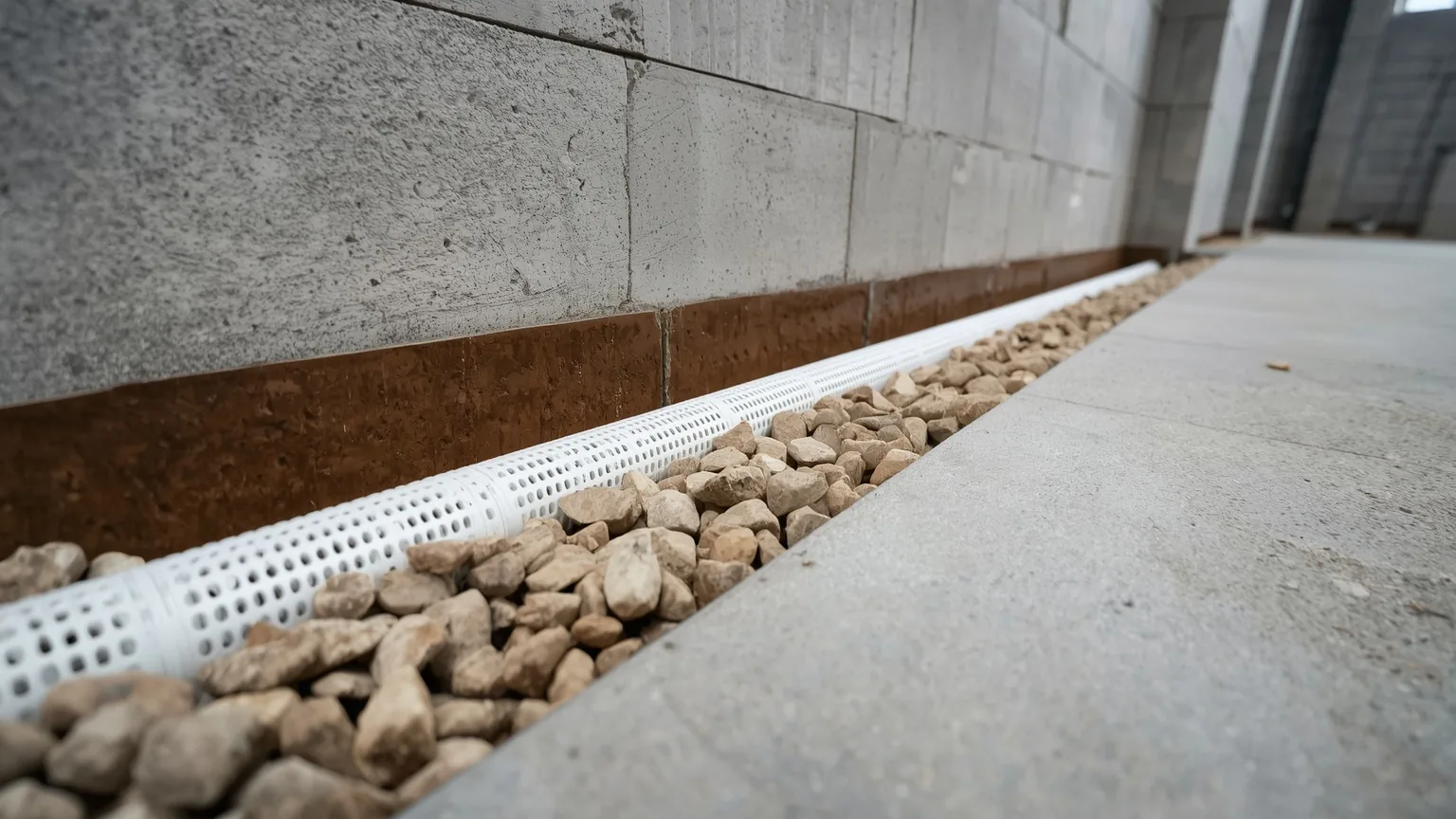
A drainage system is not a product, it is a path: intercept, carry, lift, discharge. On flat Central Iowa ground the fourth step is the one that decides whether the first three matter.
Find out what's actually causing it.
A free on-site inspection and a written scope — before any work is quoted.