
Basement floor crack repair in Des Moines
Most basement floor cracks are harmless shrinkage. The ones that matter have a lip — and on the Des Moines Lobe that usually means the slab is bridging ground that settled unevenly.
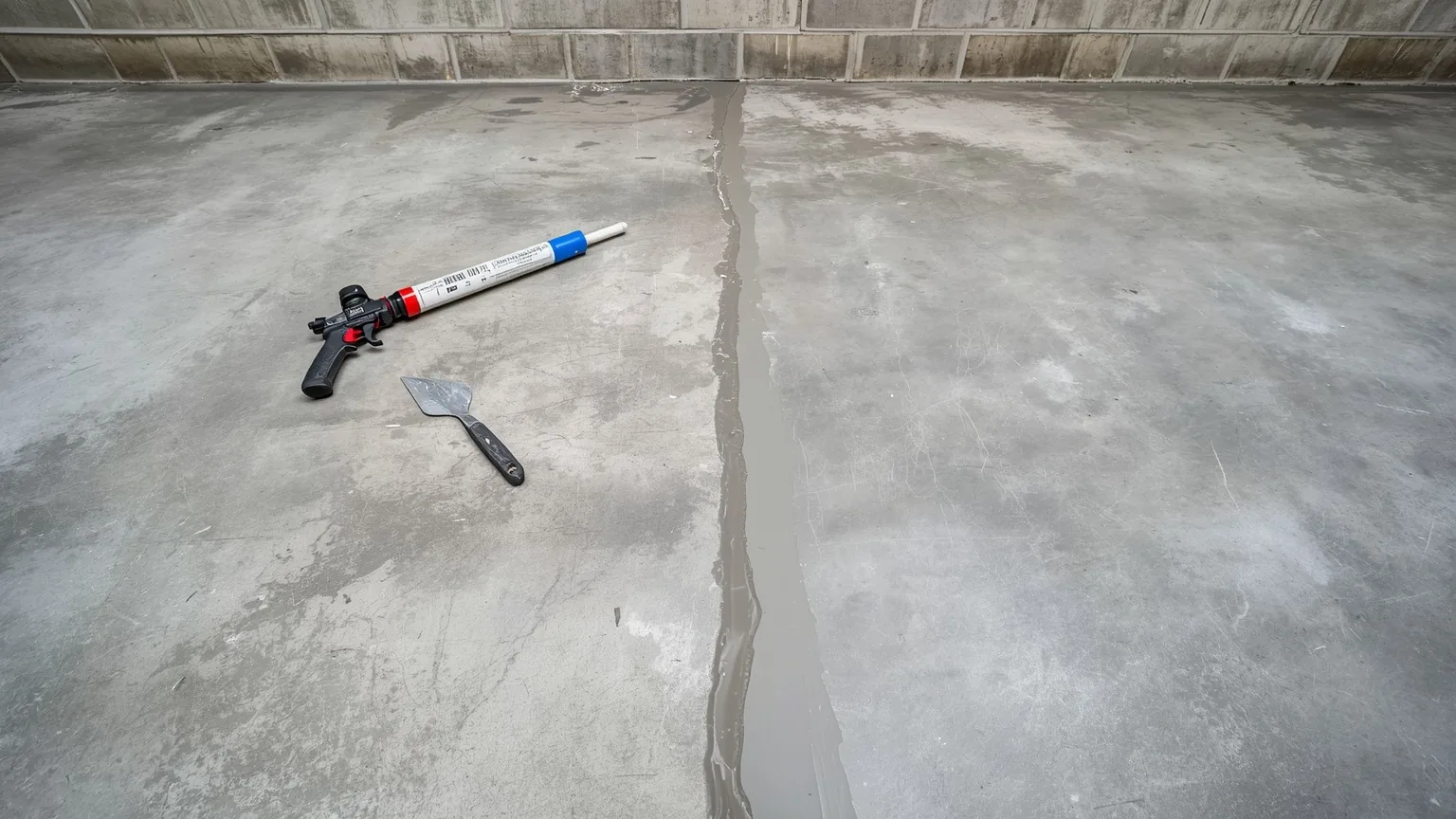
Who handles basement floor crack repair in Des Moines, IA?
Des Moines Basements repairs basement floor and slab cracks in Des Moines, sealing water entry and identifying whether a crack indicates ordinary shrinkage or settlement of the soil beneath the slab. Call (515) 676-4747.
- Typical cost: $400–$1,200 in Polk County
- Soil: Clarion-Nicollet-Webster on the Des Moines Lobe — ~60% aquic, drains poorly
- Frost depth: 42" — footings and discharge lines must sit below it
- Code: Iowa Residential Code, based on the International Residential Code and adopted with Iowa amendments
- Service area: Des Moines and 9 surrounding counties, 45-mile radius
Shrinkage versus settlement
Concrete shrinks as it cures and relieves that shrinkage by cracking. A hairline wandering across the floor with both sides level is almost always this: cosmetic, common, and stable.
The crack that matters has a vertical lip, one side sitting higher than the other. That is differential movement, meaning the soil beneath consolidated or washed out unevenly. This landscape produces it more than most — the Lobe is young and hummocky, development graded the depressions flat, and a slab poured over the boundary between firm till and softer fill will eventually find that boundary.
Water through the floor
Once a floor crack is passing water you are no longer looking at a crack. You are looking at pressure under the slab that has found an exit. Fill that exit and the pressure simply locates another one — often the cove joint a few feet away, which then looks like a new and separate fault.
The sequence matters. Relieve the head beneath the floor with perimeter drainage and a sump, then fill the crack. Done in that order it stays filled. Done in reverse it does not, and you have paid twice to learn which order was right.
Why Central Iowa ground drives this
Polk County sits on the Des Moines Lobe — the youngest glacial landscape in Iowa, left by ice that retreated only about 12,000 years ago. The soils are the Clarion-Nicollet-Webster association: Clarion well drained on the rises, Nicollet somewhat poorly drained on the slopes, and Webster poorly drained in the low ground. Roughly 60 percent of the landscape is classed as aquic — wet by default.
Because the Lobe is so young, natural drainage networks have not had time to cut. Relief across much of the metro is under five metres, and water that lands here does not run to a stream — it sits until it soaks in or evaporates. Saturated till backfill can exert well over 1,000 lb of lateral force per linear foot against a foundation wall — but in Des Moines the more common failure is volume rather than pressure: more water arriving in an hour than the ground can take in a day.
Central Iowa is dotted with prairie potholes — closed depressions with no outlet at all. Most were tile-drained and built over as the metro expanded, and a house sitting in a filled pothole is sitting in a bowl. The confluence of the Des Moines and Raccoon rivers keeps the water table shallow through the older river-adjacent neighborhoods. In the older core neighborhoods the problem compounds — des moines' older neighborhoods — sherman hill, drake, beaverdale, the east village — carry a large stock of pre-1940 housing on block and rubble foundations built before perimeter drainage was required.
Basement Floor Crack Repair questions
Are cracks in my basement floor serious?
Most are not. Run a finger across it — if both sides sit level and the crack is hairline, it is curing shrinkage and it is cosmetic. What deserves a closer look is a lip between the two sides, a crack that has visibly opened over a season, or one that weeps.
Water is coming up through a crack in the floor. What does that mean?
Groundwater under your slab has risen high enough to push through. The crack is simply where it found a way out. That means perimeter drainage and a sump, not sealant — sealing the crack relocates the leak rather than ending it.
Can floor cracks be repaired permanently?
Yes, once the reason is addressed. A dry shrinkage crack fills permanently with flexible sealant or resin. A crack that moved because the ground beneath moved needs that support stabilized first, or it reopens. A crack passing water needs the pressure relieved before any filling holds.
Related foundation services
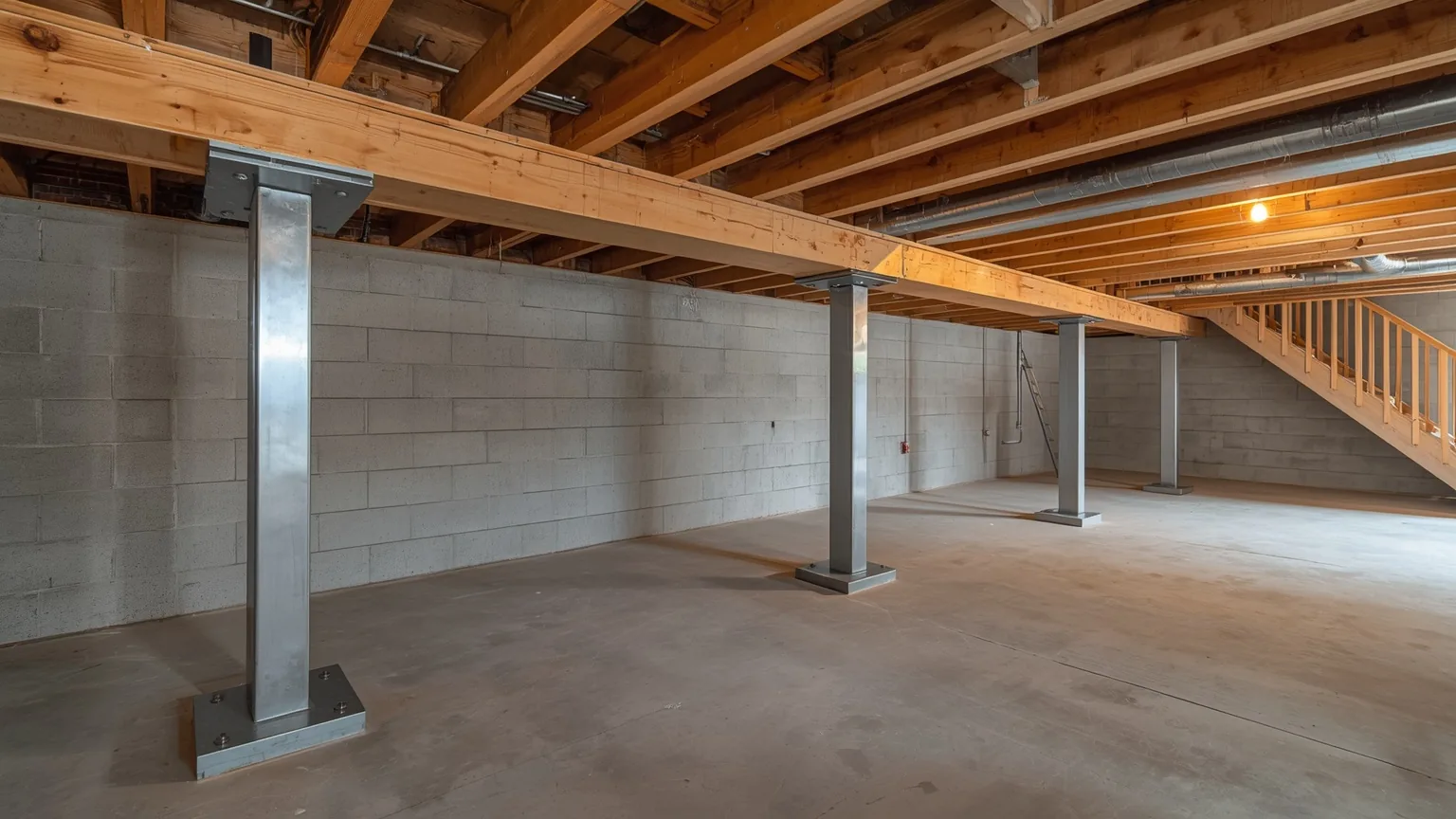
Foundation Repair
Foundation problems in Central Iowa come from two directions: lateral load from saturated till, and footings settling into ground that was never as stable as it looked.
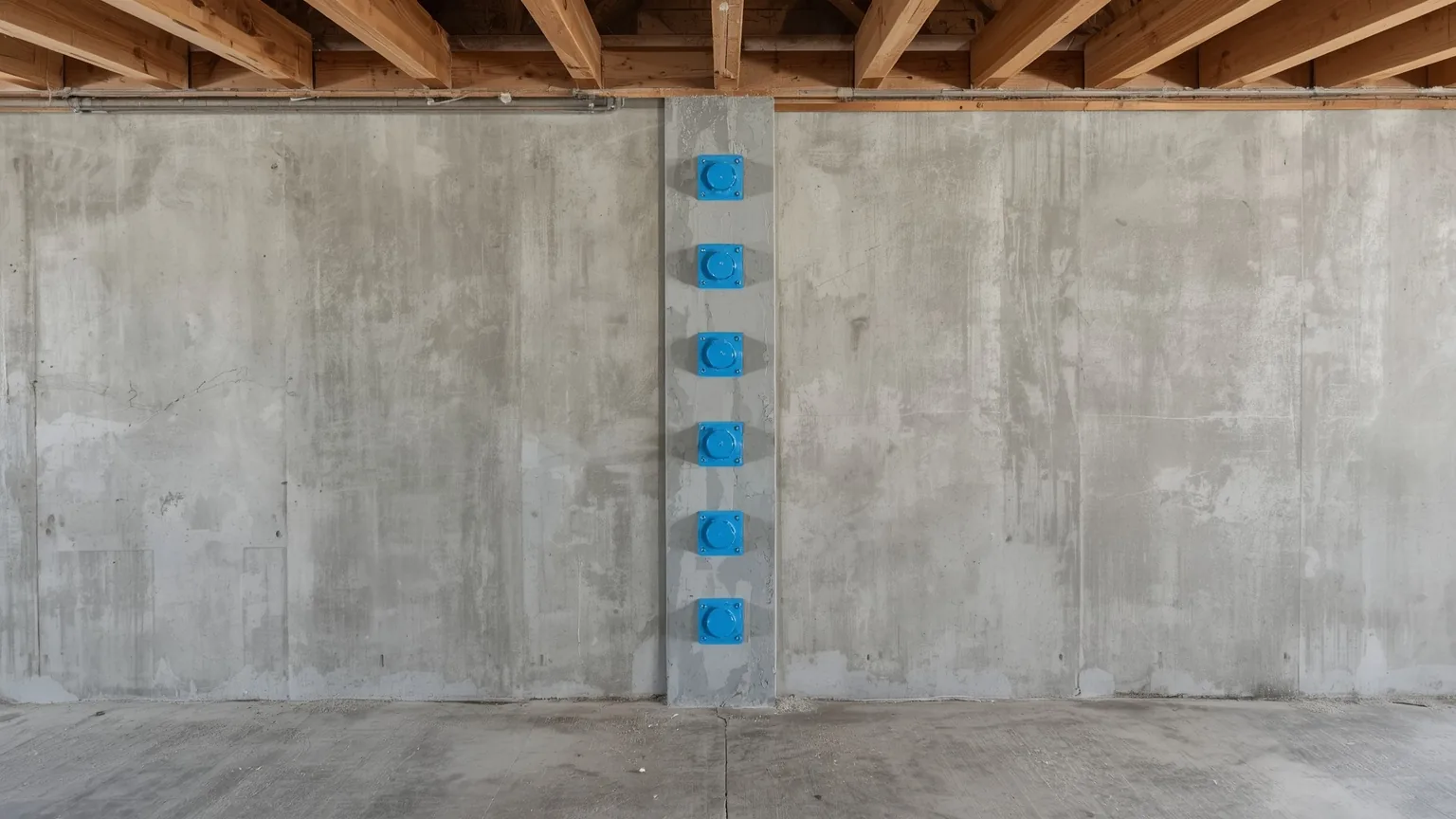
Foundation Crack Repair
Width, direction and movement tell you everything. A hairline running vertically down a poured wall is the concrete relieving its own curing shrinkage. A crack tracking horizontally along a mortar bed is the ground outside winning.
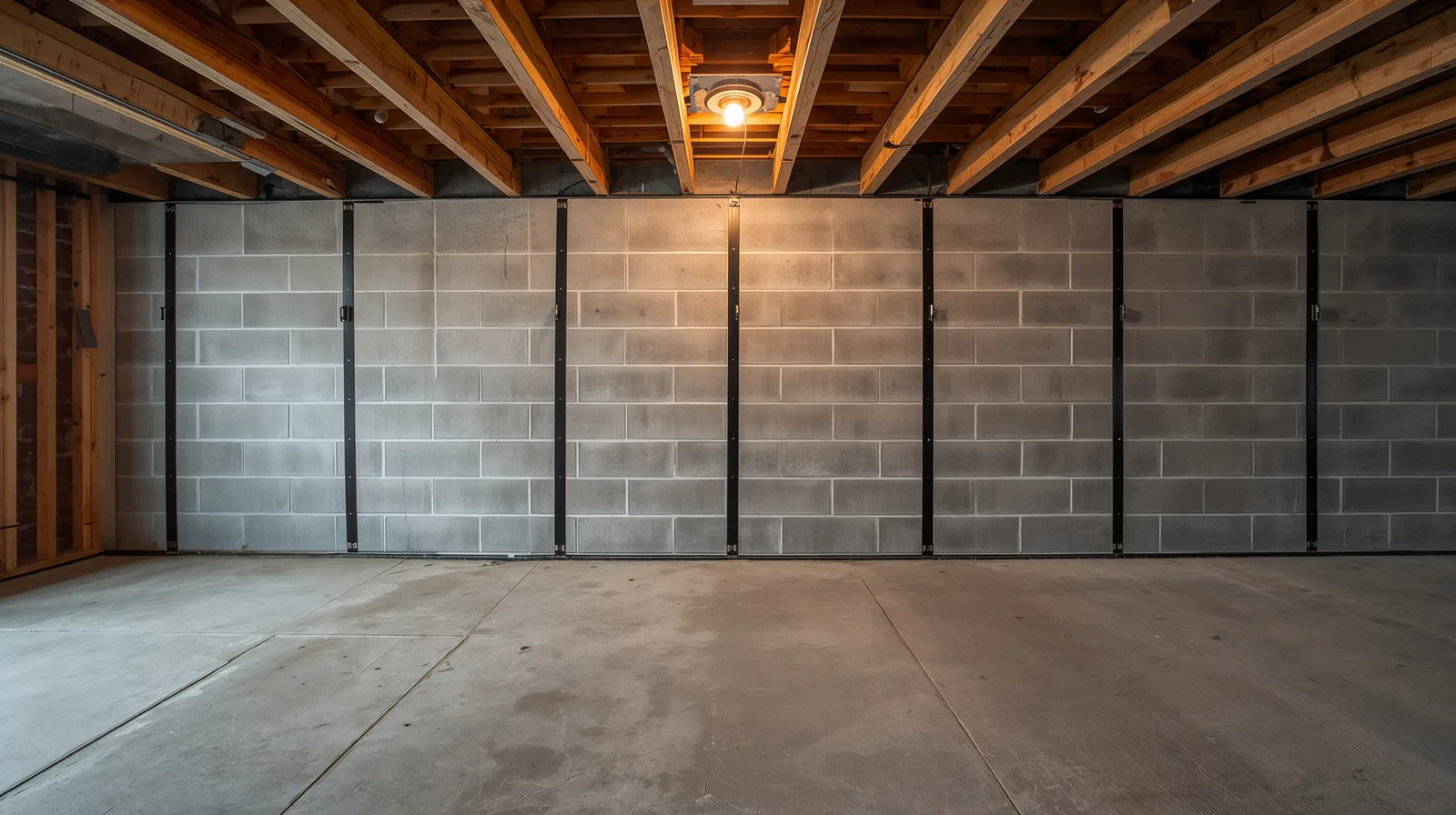
Bowing & Basement Wall Repair
A bowing basement wall means the ground outside is winning. On the Lobe the load is intermittent rather than constant — but Iowa's freeze-thaw cycle makes sure none of the ground gained is ever given back.
Find out what's actually causing it.
A free on-site inspection and a written scope — before any work is quoted.