
Sump pump replacement in Des Moines
The pump that has worked fine for nine years will fail during the storm that needed it. Central Iowa concentrates a pump's entire working life into a handful of summer afternoons, which is why age beats symptoms as a replacement trigger.
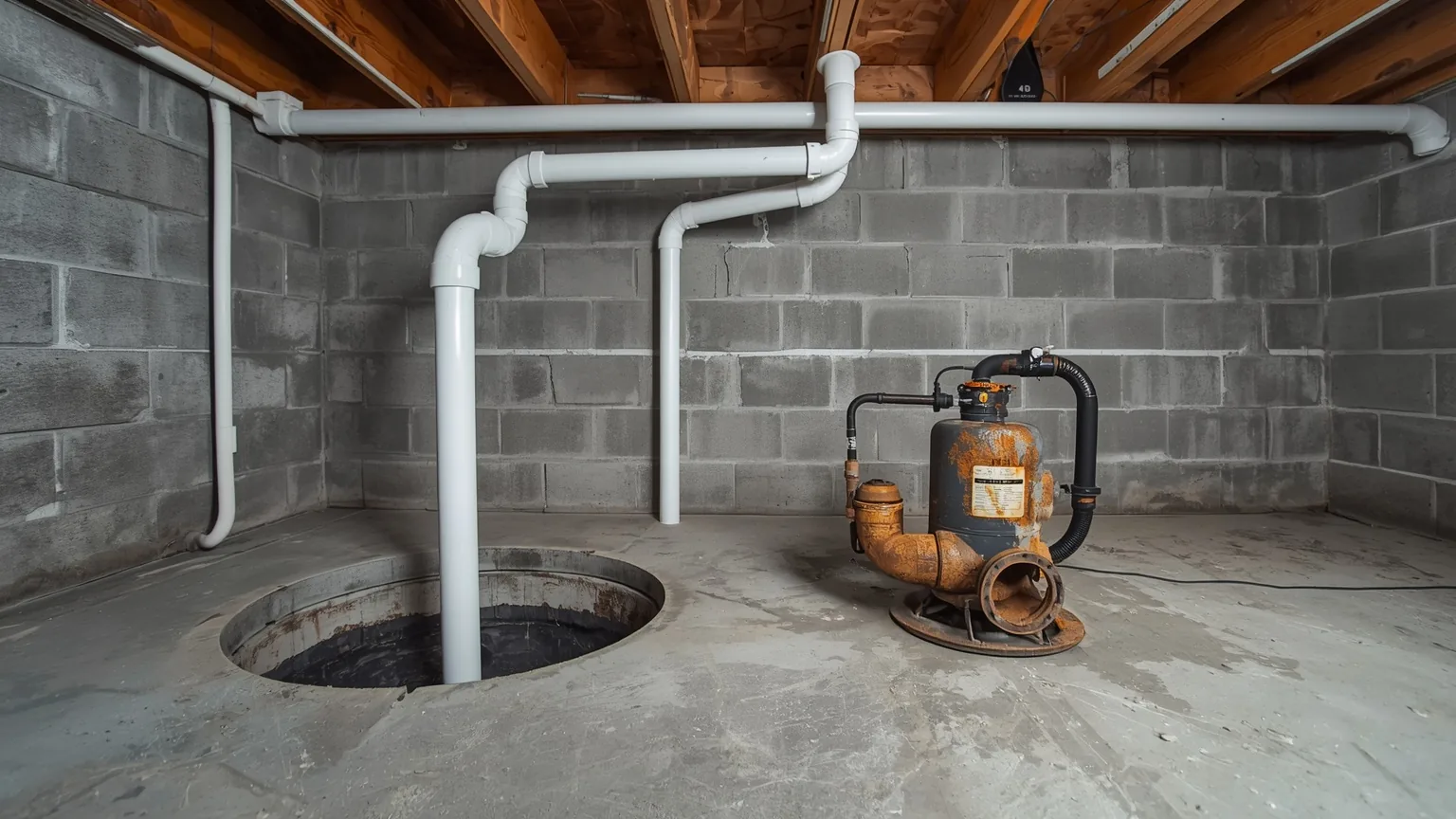
Who handles sump pump replacement in Des Moines, IA?
Des Moines Basements replaces failed and end-of-life sump pumps across Des Moines and Polk County, usually same or next day, with the basin and discharge line checked as part of the job. Call (515) 676-4747.
- Typical cost: $800–$2,500 in Polk County
- Soil: Clarion-Nicollet-Webster on the Des Moines Lobe — ~60% aquic, drains poorly
- Frost depth: 42" — footings and discharge lines must sit below it
- Code: Iowa Residential Code, based on the International Residential Code and adopted with Iowa amendments
- Service area: Des Moines and 9 surrounding counties, 45-mile radius
Signs the pump is done
Symptoms are worth knowing but they arrive late. Rapid on-off cycling points at a failing float or an undersized basin. A motor running while the water level holds steady means a worn impeller or a blocked line. Rust, grinding and rattling need no interpretation.
Age is the better signal. Run-hours here are concentrated into storm events: a pump can sit near-idle for months and then run hard for six hours during a single cell. That means it can look and sound perfect in April and be at the end of its life, because the wear happened in bursts nobody was there to hear.
What gets checked at replacement
With the pit open and the line exposed, replacement is the moment to audit everything downstream of the pump. The check valve is the usual offender: when it fails, the column of water standing in the discharge pipe drops back into the basin the moment the pump stops, so the next cycle lifts water the pump already lifted.
The discharge run gets inspected for depth, fall and distance from the house. On flat Des Moines lots the most common defect is a line that is simply too short — it dumps water back onto ground that cannot take it, and the water returns to the tile within the hour. The basin gets checked for a proper sealed lid, and the circuit for a GFCI that nuisance-trips, which leaves a pump off exactly when nobody is watching.
Why Central Iowa ground drives this
Polk County sits on the Des Moines Lobe — the youngest glacial landscape in Iowa, left by ice that retreated only about 12,000 years ago. The soils are the Clarion-Nicollet-Webster association: Clarion well drained on the rises, Nicollet somewhat poorly drained on the slopes, and Webster poorly drained in the low ground. Roughly 60 percent of the landscape is classed as aquic — wet by default.
Because the Lobe is so young, natural drainage networks have not had time to cut. Relief across much of the metro is under five metres, and water that lands here does not run to a stream — it sits until it soaks in or evaporates. Saturated till backfill can exert well over 1,000 lb of lateral force per linear foot against a foundation wall — but in Des Moines the more common failure is volume rather than pressure: more water arriving in an hour than the ground can take in a day.
Central Iowa is dotted with prairie potholes — closed depressions with no outlet at all. Most were tile-drained and built over as the metro expanded, and a house sitting in a filled pothole is sitting in a bowl. The confluence of the Des Moines and Raccoon rivers keeps the water table shallow through the older river-adjacent neighborhoods. In the older core neighborhoods the problem compounds — des moines' older neighborhoods — sherman hill, drake, beaverdale, the east village — carry a large stock of pre-1940 housing on block and rubble foundations built before perimeter drainage was required.
Sump Pump Replacement questions
How quickly can a pump be replaced?
A straight swap is usually a couple of hours. If the pit needs enlarging, the discharge rerouting to get below 42 inches, or the circuit reworking, plan on most of a day. After a major storm the constraint is availability rather than the work — the whole metro discovers its pump in the same week.
What does replacement cost?
Replacement typically runs $800 to $2,500 depending on the pump and whether the basin, check valve and discharge get corrected with it. Adding a battery backup during the same visit costs less than doing it separately later.
My pump runs but the water is not going down. Why?
Look at the discharge before you blame the pump. A blocked outlet, a line with no fall, or a failed check valve all produce exactly this — a motor working and a water level that will not drop. In Des Moines the most common version is a line that is simply too short, returning water to saturated ground a few feet away.
Related drainage services
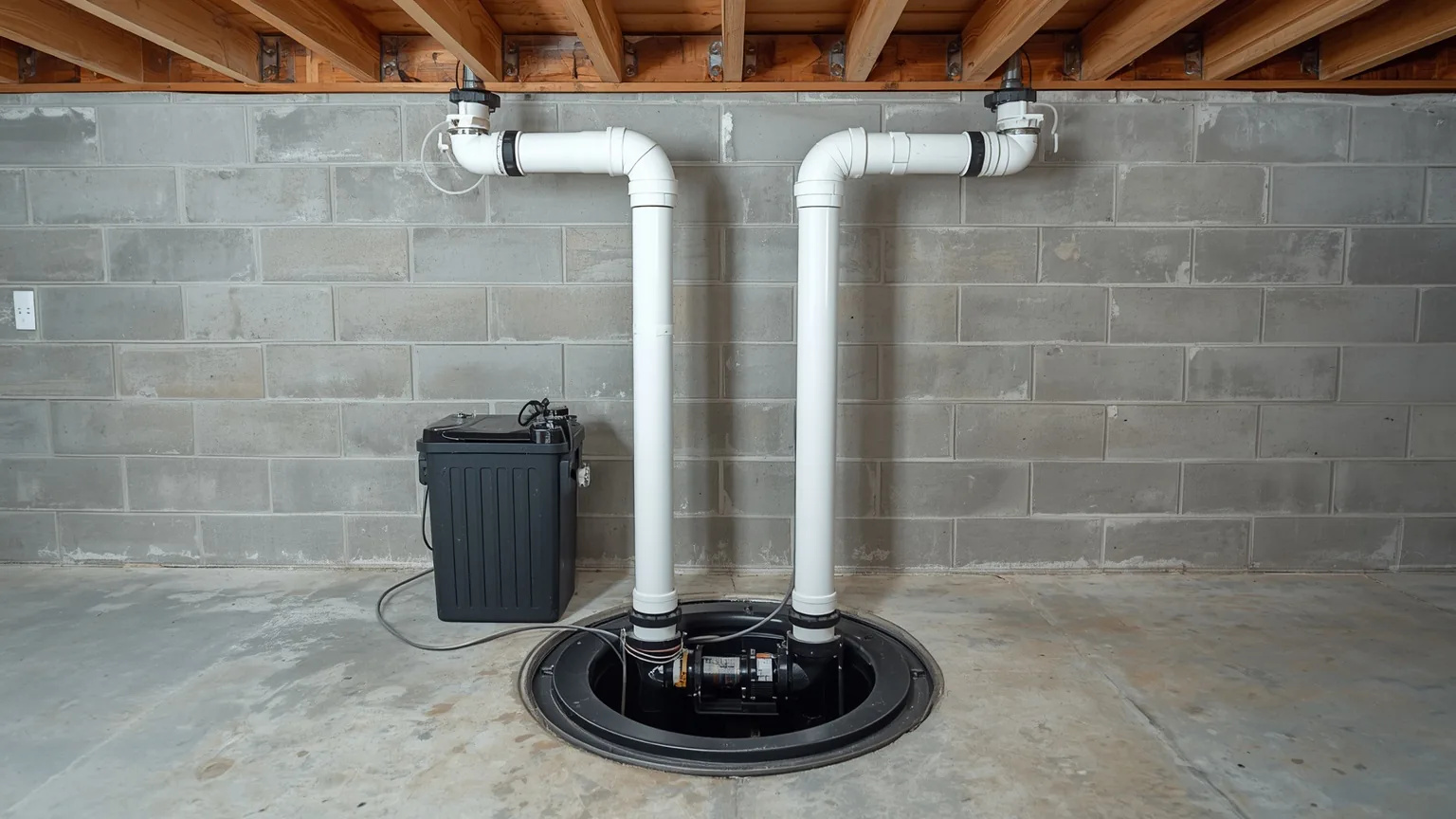
Sump Pump Installation
In Central Iowa a sump pump is sized for a thunderstorm, not a season. The design event is two to four inches falling in an afternoon onto ground that cannot take it.
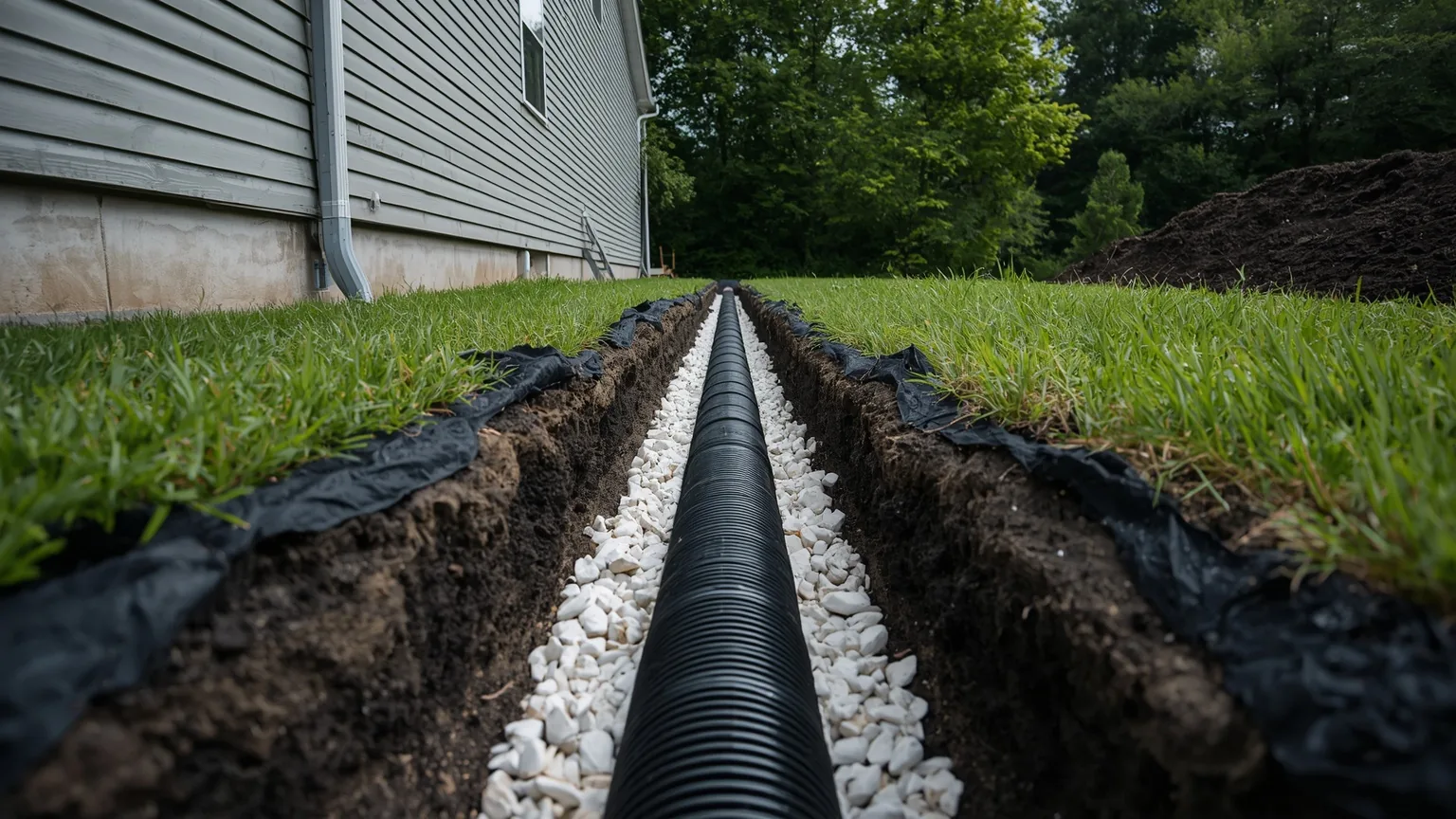
French Drain Installation
On flat Des Moines Lobe ground, water does not run off — it waits. A French drain gives it somewhere to go that is not your foundation.
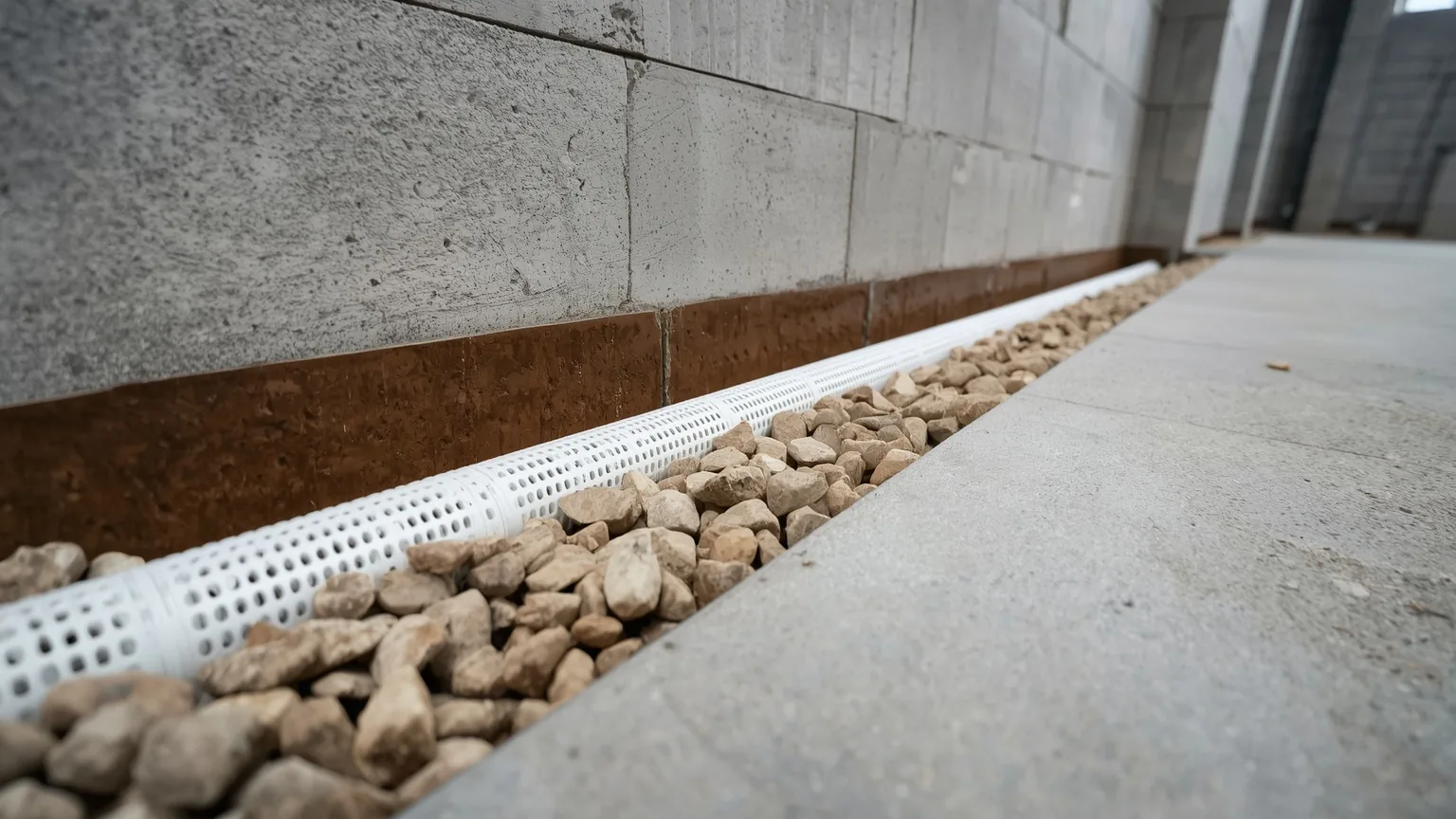
Basement Drainage Systems
A drainage system is not a product, it is a path: intercept, carry, lift, discharge. On flat Central Iowa ground the fourth step is the one that decides whether the first three matter.
Find out what's actually causing it.
A free on-site inspection and a written scope — before any work is quoted.