
Exterior basement waterproofing in Des Moines
Exterior waterproofing stops water at the outside face of the wall. It is the most thorough repair available and the one most constrained by what the surrounding ground will accept.
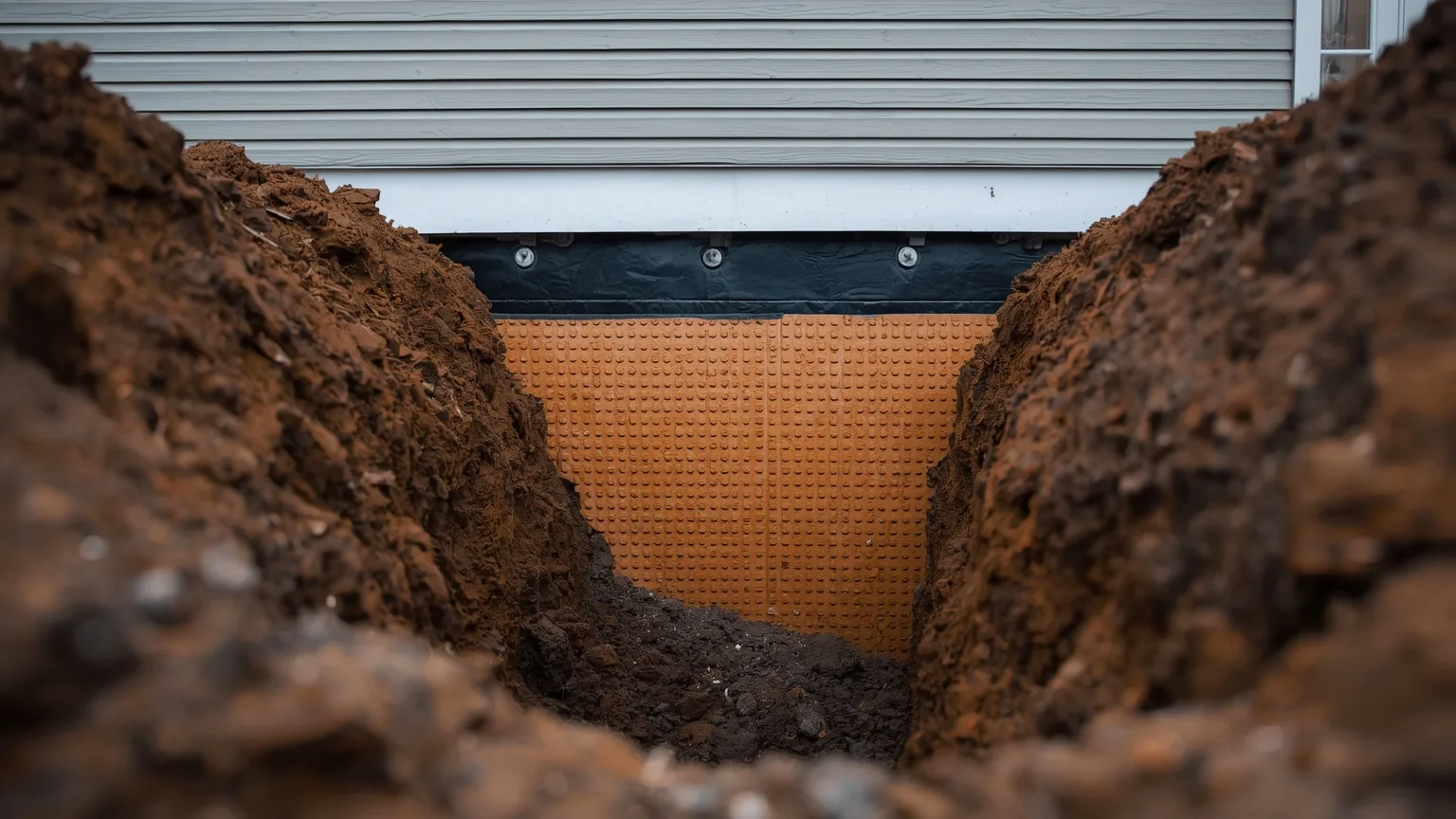
Who handles exterior basement waterproofing in Des Moines, IA?
Des Moines Basements performs exterior excavation waterproofing in Des Moines — the foundation is exposed to footing depth, cleaned, membrane-coated, covered with drainage board, and given a new footing drain in washed stone. Call (515) 676-4747.
- Typical cost: $12,000–$30,000 in Polk County
- Soil: Clarion-Nicollet-Webster on the Des Moines Lobe — ~60% aquic, drains poorly
- Frost depth: 42" — footings and discharge lines must sit below it
- Code: Iowa Residential Code, based on the International Residential Code and adopted with Iowa amendments
- Service area: Des Moines and 9 surrounding counties, 45-mile radius
When exterior work is the right call
Three situations justify the cost and the mess. The wall itself is failing and someone needs to see it from outside. The basement is finished to a standard that makes interior demolition worse than excavation. Or the original backfill was so badly done that no amount of interior collection keeps pace with what arrives at the footing.
It is the only approach that keeps water out of the wall rather than managing it once inside. Interior drainage collects; exterior work excludes. Both work, at different points in the path.
What the scope involves
The foundation is excavated to the footing, the wall cleaned and repaired, a membrane applied, dimpled drainage board fastened over it, and new drain tile laid in stone to the Iowa Residential Code specification. Then backfill — ideally with material that drains better than what came out, which on this landscape often means importing it.
The Des Moines complication is where the water goes afterwards. An exterior system still needs an outlet, and on flat Lobe ground there may be none within a practical distance. Excavating a perfect exterior system that discharges into ground as flat and saturated as the ground it drains accomplishes very little. Any quote should say where the outlet is before the first shovel.
Season matters less here than in the far north — Iowa's 42-inch frost depth and milder winters leave a longer working window than Wisconsin gets — but December through February still makes excavation slow and expensive.
Why Central Iowa ground drives this
Polk County sits on the Des Moines Lobe — the youngest glacial landscape in Iowa, left by ice that retreated only about 12,000 years ago. The soils are the Clarion-Nicollet-Webster association: Clarion well drained on the rises, Nicollet somewhat poorly drained on the slopes, and Webster poorly drained in the low ground. Roughly 60 percent of the landscape is classed as aquic — wet by default.
Because the Lobe is so young, natural drainage networks have not had time to cut. Relief across much of the metro is under five metres, and water that lands here does not run to a stream — it sits until it soaks in or evaporates. Saturated till backfill can exert well over 1,000 lb of lateral force per linear foot against a foundation wall — but in Des Moines the more common failure is volume rather than pressure: more water arriving in an hour than the ground can take in a day.
Central Iowa is dotted with prairie potholes — closed depressions with no outlet at all. Most were tile-drained and built over as the metro expanded, and a house sitting in a filled pothole is sitting in a bowl. The confluence of the Des Moines and Raccoon rivers keeps the water table shallow through the older river-adjacent neighborhoods. In the older core neighborhoods the problem compounds — des moines' older neighborhoods — sherman hill, drake, beaverdale, the east village — carry a large stock of pre-1940 housing on block and rubble foundations built before perimeter drainage was required.
Exterior Basement Waterproofing questions
What does exterior waterproofing cost in Des Moines?
Exterior waterproofing in Polk County runs $12,000 to $30,000. Depth, equipment access, what has to be removed and replaced above, and how far spoil has to be hauled all drive it — as does whether a viable outlet exists nearby.
Is exterior waterproofing better than interior drain tile?
Better is the wrong axis. Exterior keeps water out of the wall; interior manages it once it arrives. Exterior is more thorough, more disruptive and more expensive, and it is right when the wall itself needs attention. Interior is right for most Des Moines homes with sound walls, and on flat lots it is often the only approach with a working discharge.
What is the difference between damproofing and waterproofing?
Damproofing is a coating that resists soil moisture — what the code requires on most residential foundations, and not designed to hold liquid water under pressure. Waterproofing is a membrane system built to resist hydrostatic pressure. On saturated ground damproofing alone is frequently not enough, which is why drainage matters as much as the coating.
Related waterproofing services
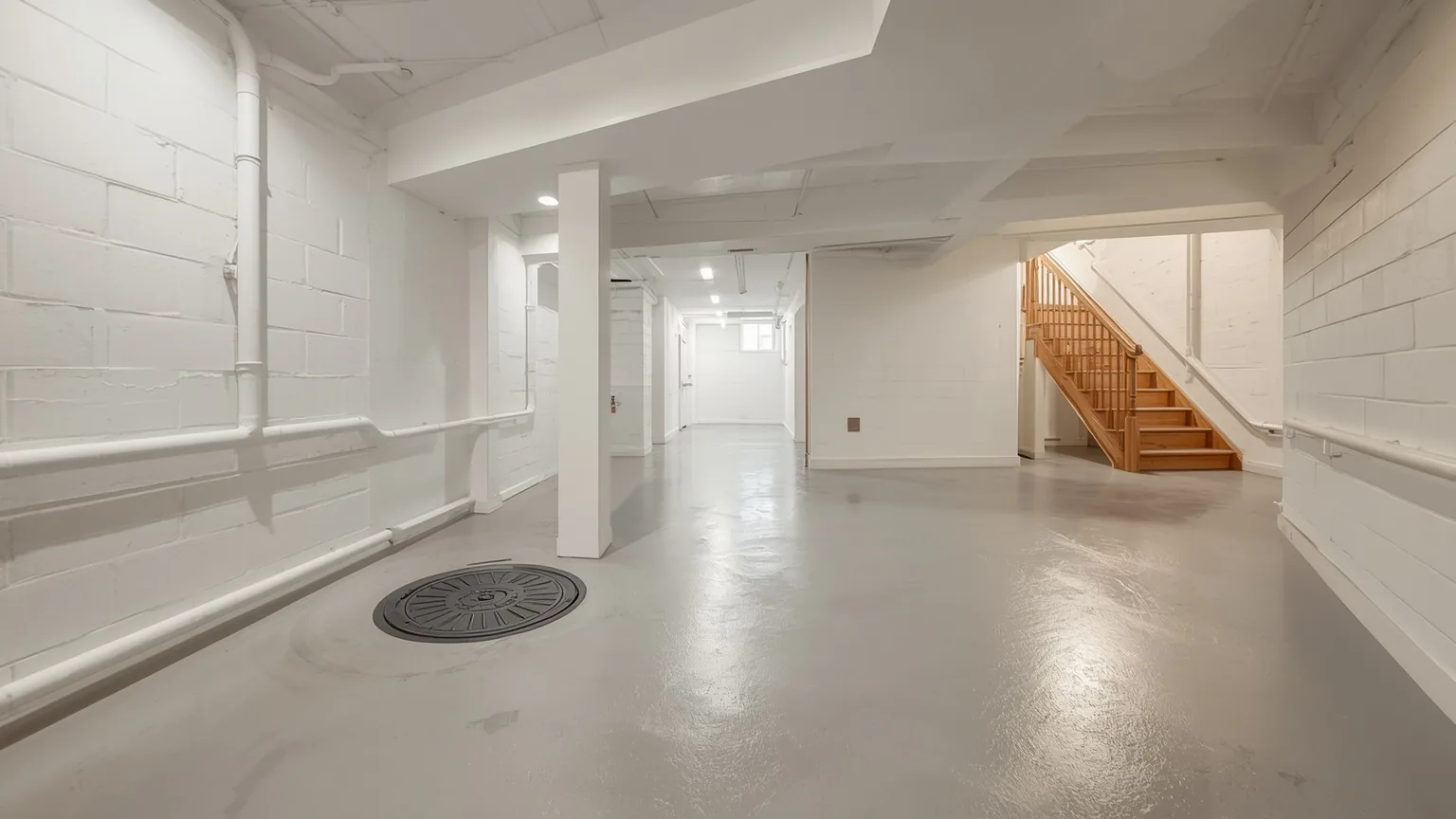
Basement Waterproofing
A wet Des Moines basement is usually a volume problem, not a pressure problem. Central Iowa ground is flat, young and internally drained — when a July storm drops three inches in an afternoon, the water has nowhere to go.
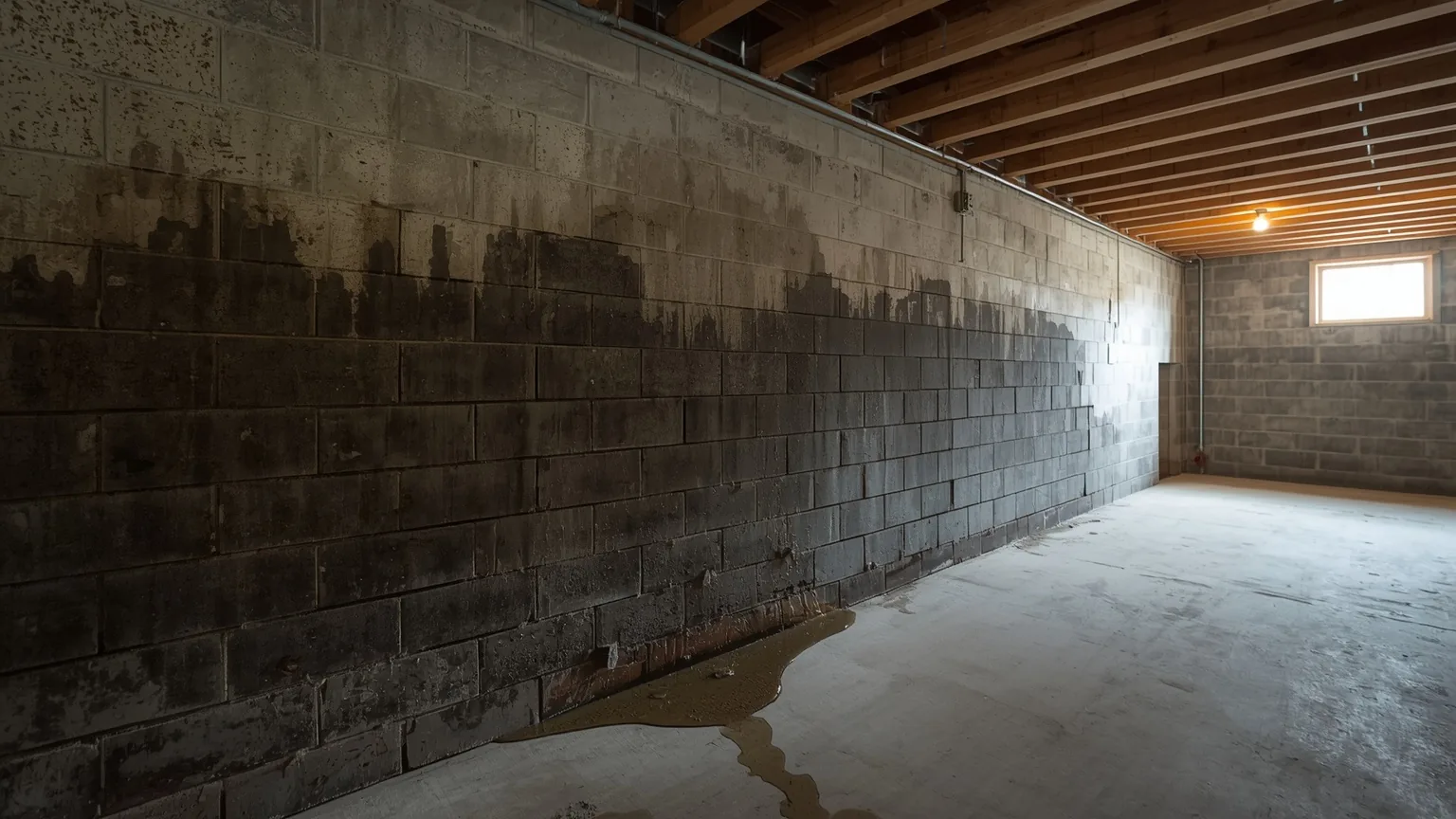
Wet Basement Repair
Des Moines basements leak on a trigger, and the trigger is usually a single storm. Which opening the water used decides whether the fix costs hundreds or five figures.
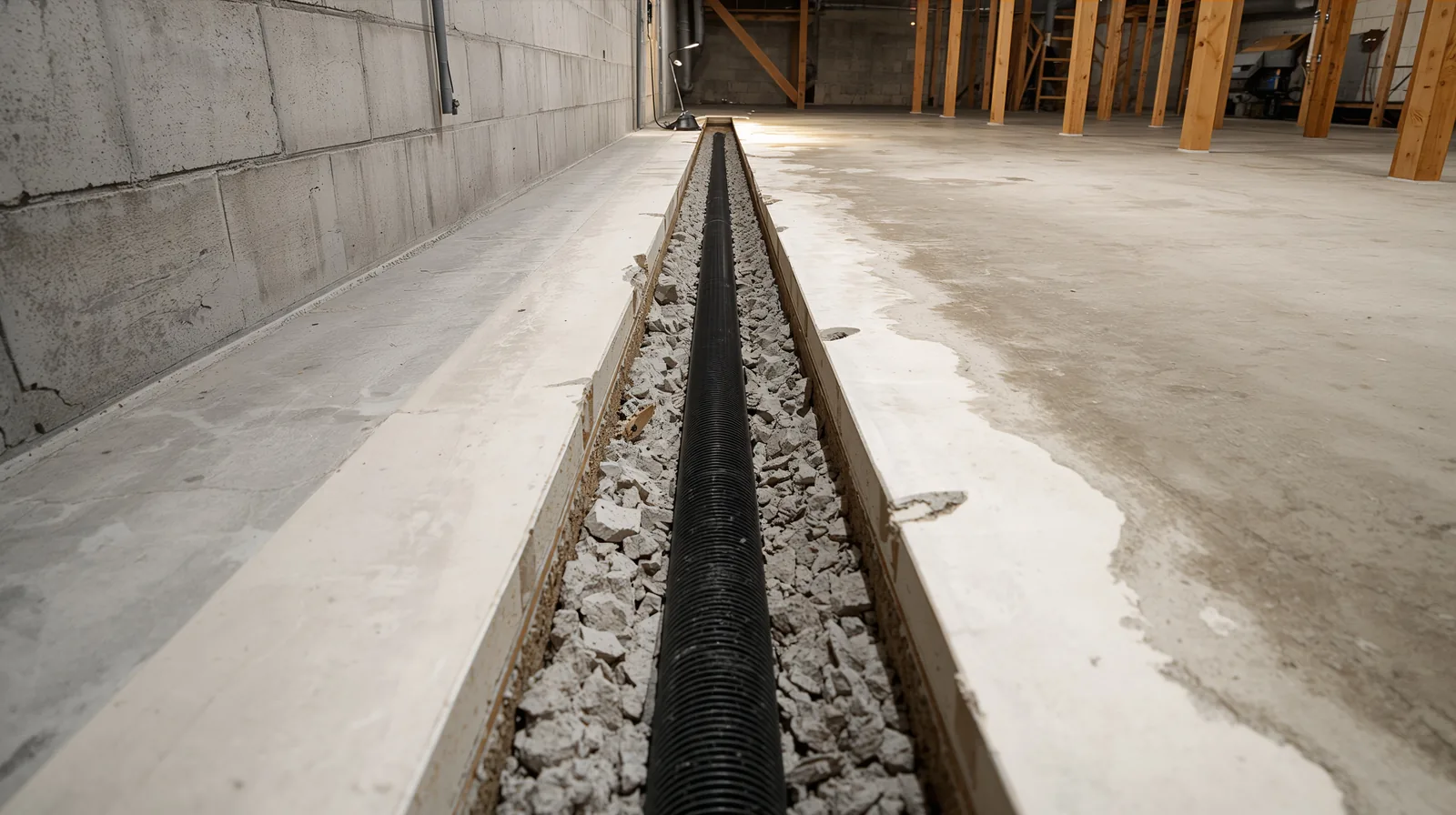
Interior Drain Tile
Interior drain tile is the workhorse repair across the Des Moines metro. It relieves pressure without touching the yard — which matters on lots where there is nowhere to send the water anyway.
Find out what's actually causing it.
A free on-site inspection and a written scope — before any work is quoted.