
Foundation repair in Des Moines
Foundation problems in Central Iowa come from two directions: lateral load from saturated till, and footings settling into ground that was never as stable as it looked.
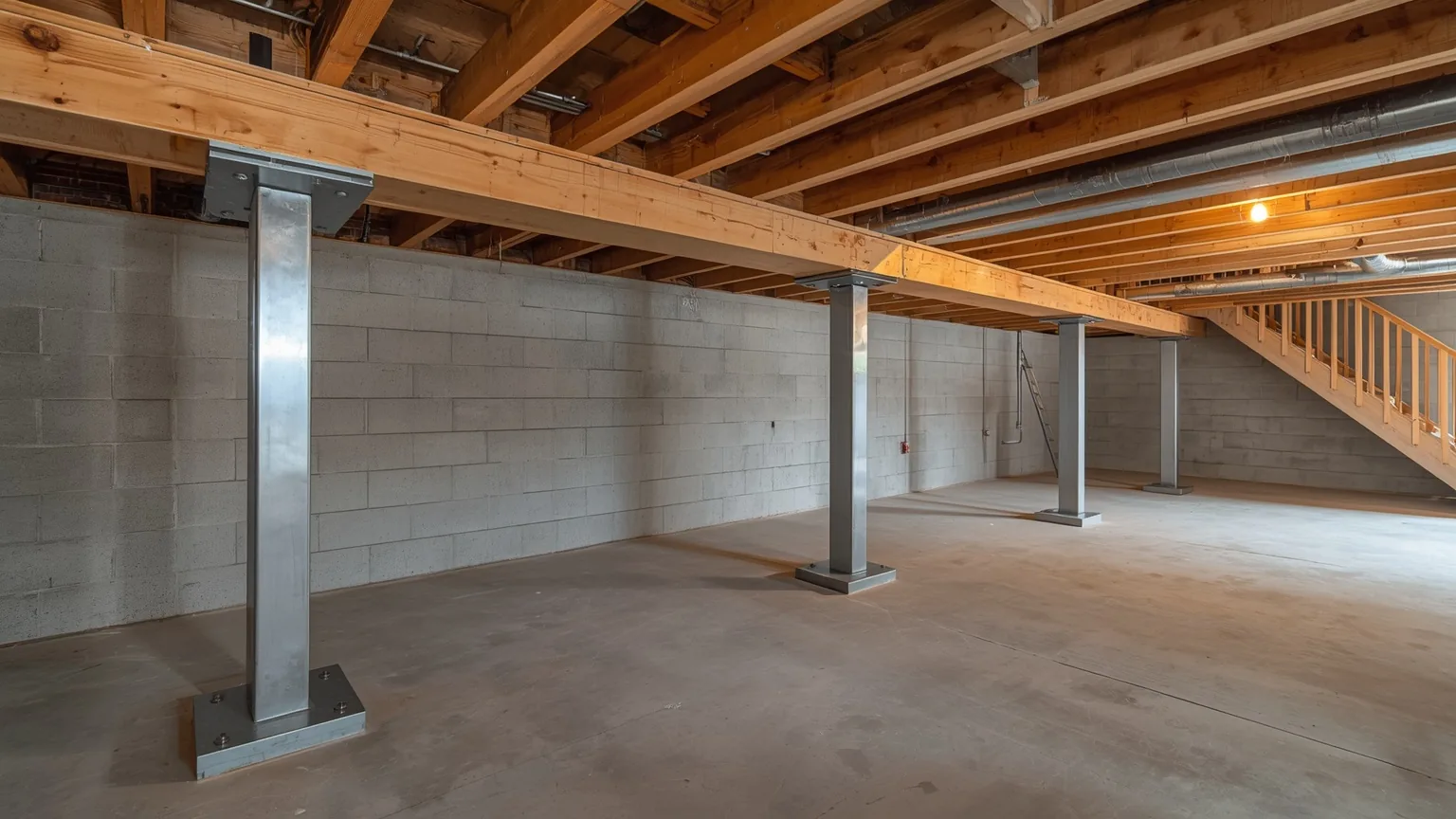
Who handles foundation repair in Des Moines, IA?
Des Moines Basements provides foundation repair throughout Des Moines and Polk County — wall anchors and carbon fiber for bowing walls, piering for settlement, and crack repair — with a written structural assessment before any work is quoted. Call (515) 676-4747.
- Typical cost: $5,000–$25,000 in Polk County
- Soil: Clarion-Nicollet-Webster on the Des Moines Lobe — ~60% aquic, drains poorly
- Frost depth: 42" — footings and discharge lines must sit below it
- Code: Iowa Residential Code, based on the International Residential Code and adopted with Iowa amendments
- Service area: Des Moines and 9 surrounding counties, 45-mile radius
Lateral pressure vs. settlement
Lateral pressure shows up as a horizontal crack along a mortar course near mid-height, an inward bow you can measure with a string line, or stair-step cracking running toward the corners. Saturated till backfill can exert well over 1,000 pounds per linear foot, and on a lot that drains poorly the backfill trench stays loaded long after the storm has passed.
Settlement is the mode that catches Des Moines homeowners out, and the Lobe's history explains why. This landscape is young, hummocky and full of filled depressions — knob and kettle ground that was graded flat for development. A footing bearing partly on dense till and partly on the soft organic fill of an old pothole settles unevenly, and the crack widens toward the soft end.
Getting the diagnosis right is most of the work. A horizontal crack means load, and load needs the wall braced. A diagonal crack that opens toward one end means support, and support means carrying the footing down to something that will not keep moving. Treating the second like the first is how homeowners end up bracing a wall that is still dropping.
How the repairs work
Method follows deflection. Carbon fiber bonded flat to the block handles roughly the first two inches. Beyond that, steel bracing anchored between slab and joists takes the load. Wall anchors reach out to a plate buried in native soil — powerful, but they need a yard with undisturbed ground to bear against, and on lots where the developer graded and filled a depression that bearing may not exist.
For settlement the answer is piering to competent bearing. Depth here is unpredictable in a way it is not in older landscapes: two footings twenty feet apart can need very different pier depths if one sits on till and the other over filled organic material. That is why a proper assessment probes rather than assumes.
Neither repair addresses water. Stabilizing a wall stops it moving; it does not stop what moved it. Where a wall has bowed under saturated backfill, drainage belongs in the same scope.
Why Central Iowa ground drives this
Polk County sits on the Des Moines Lobe — the youngest glacial landscape in Iowa, left by ice that retreated only about 12,000 years ago. The soils are the Clarion-Nicollet-Webster association: Clarion well drained on the rises, Nicollet somewhat poorly drained on the slopes, and Webster poorly drained in the low ground. Roughly 60 percent of the landscape is classed as aquic — wet by default.
Because the Lobe is so young, natural drainage networks have not had time to cut. Relief across much of the metro is under five metres, and water that lands here does not run to a stream — it sits until it soaks in or evaporates. Saturated till backfill can exert well over 1,000 lb of lateral force per linear foot against a foundation wall — but in Des Moines the more common failure is volume rather than pressure: more water arriving in an hour than the ground can take in a day.
Central Iowa is dotted with prairie potholes — closed depressions with no outlet at all. Most were tile-drained and built over as the metro expanded, and a house sitting in a filled pothole is sitting in a bowl. The confluence of the Des Moines and Raccoon rivers keeps the water table shallow through the older river-adjacent neighborhoods. In the older core neighborhoods the problem compounds — des moines' older neighborhoods — sherman hill, drake, beaverdale, the east village — carry a large stock of pre-1940 housing on block and rubble foundations built before perimeter drainage was required.
Foundation Repair questions
How much does foundation repair cost in Des Moines?
Foundation repair in Polk County runs $5,000 to $25,000 depending on failure mode and access. Carbon fiber on a modestly bowed wall sits at the low end; piering a settled footing over filled ground sits at the high end. Bowing wall stabilization specifically runs $4,000–$15,000.
Is a horizontal crack in my block wall serious?
Yes. A horizontal crack along a mortar joint means the wall is bending inward under lateral load. It is a strength problem rather than a water path, it does not stabilize on its own, and freeze-thaw cycling at Iowa's 42-inch frost depth drives it further each winter. It needs assessment rather than monitoring.
How do I know if it's settlement or clay pressure?
Direction tells you. Horizontal cracking near mid-wall and measurable inward bow are lateral pressure. Stair-step cracking that widens toward one corner, diagonal cracks from window openings, and doors binding on one side of the house are settlement. On the Lobe both can appear in the same house when a footing crosses from till onto filled ground.
Will foundation repair fix my wet basement too?
Not by itself. Bracing or piering stops the movement; the water that caused it is still outside. In practice a bowed wall in Central Iowa almost always has a drainage problem behind it, which is why the assessment covers both and the written scope says which is driving which.
Does foundation work need a permit?
Structural repair needs a permit and usually engineered drawings. The City of Des Moines Permit and Development Center handles it inside the city; suburban jurisdictions handle their own. A contractor who says a wall anchor system needs no permit is worth a second opinion.
Related foundation services
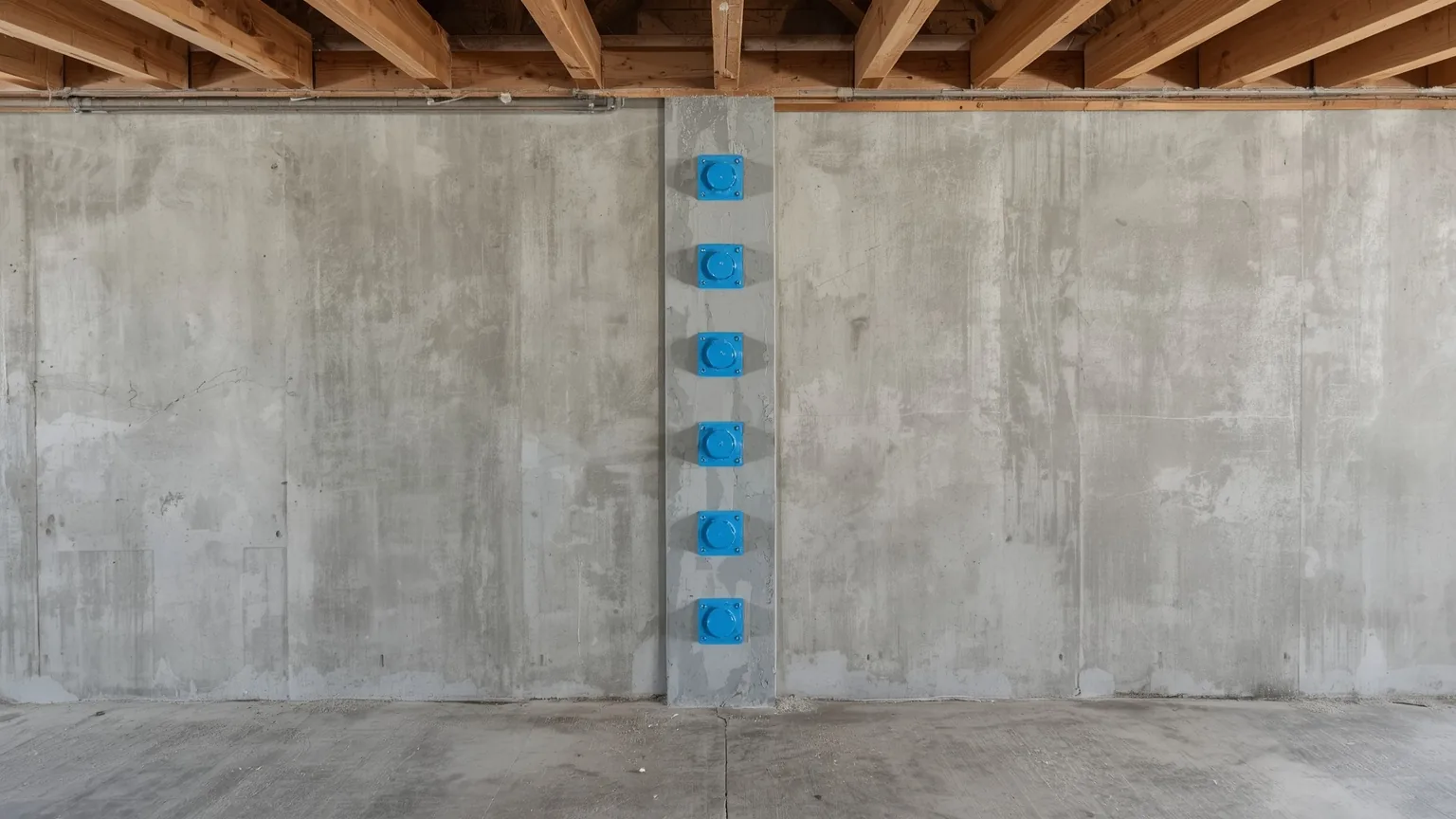
Foundation Crack Repair
Width, direction and movement tell you everything. A hairline running vertically down a poured wall is the concrete relieving its own curing shrinkage. A crack tracking horizontally along a mortar bed is the ground outside winning.
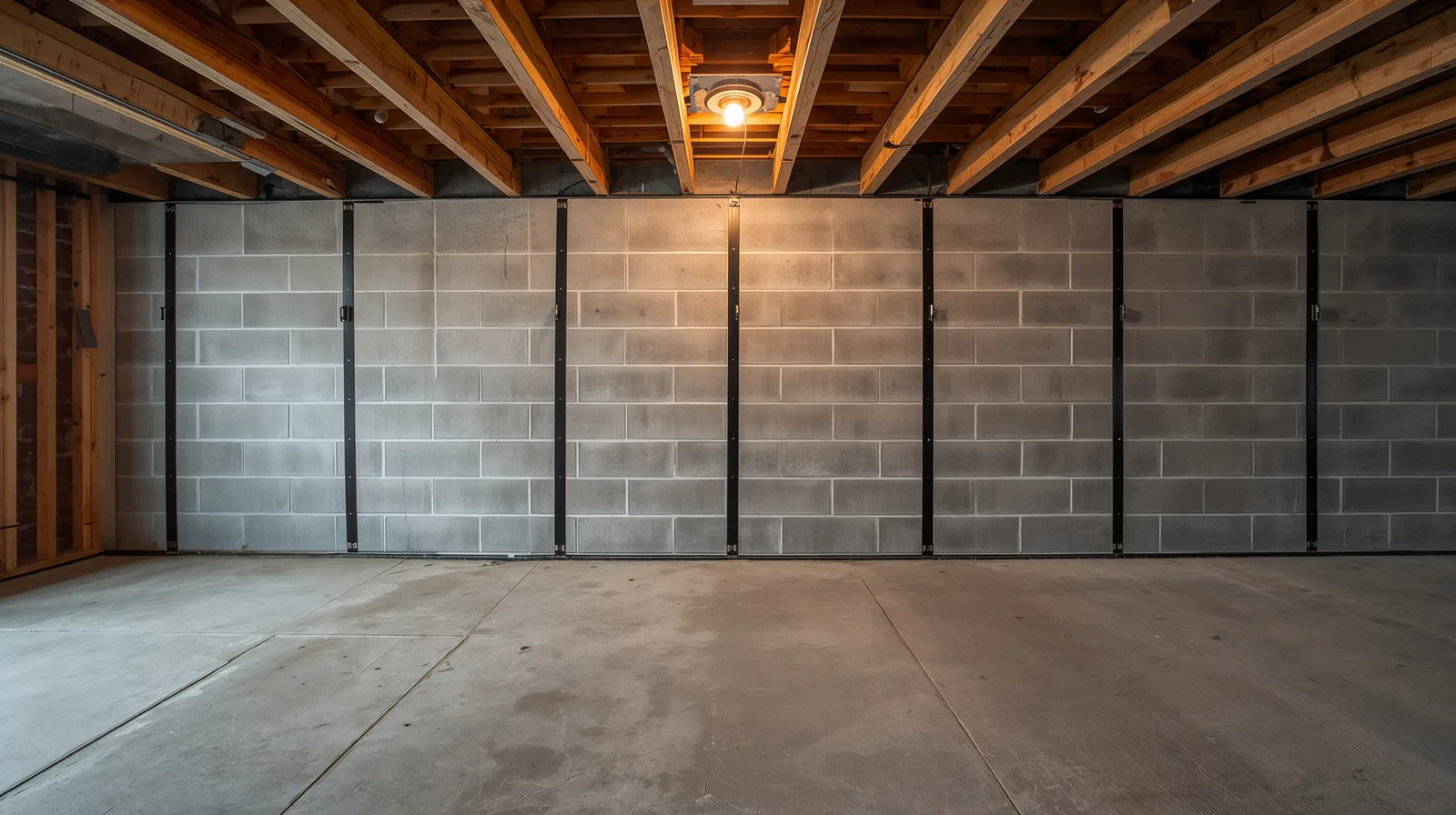
Bowing & Basement Wall Repair
A bowing basement wall means the ground outside is winning. On the Lobe the load is intermittent rather than constant — but Iowa's freeze-thaw cycle makes sure none of the ground gained is ever given back.
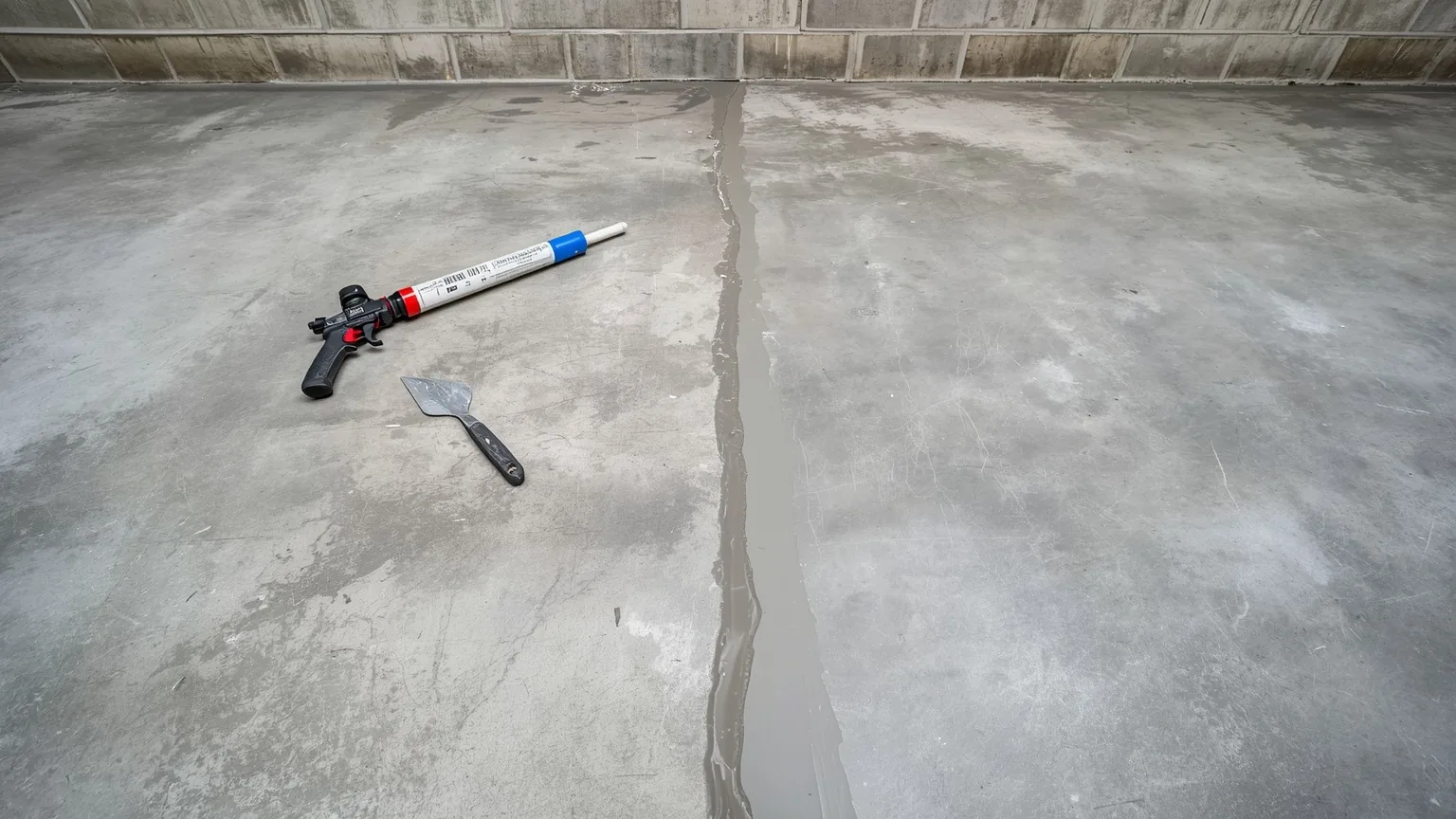
Basement Floor Crack Repair
Most basement floor cracks are harmless shrinkage. The ones that matter have a lip — and on the Des Moines Lobe that usually means the slab is bridging ground that settled unevenly.
Find out what's actually causing it.
A free on-site inspection and a written scope — before any work is quoted.