
Flooded basement help in Des Moines
In Des Moines a flooded basement is usually a storm event, not a slow seasonal failure. It arrives in an afternoon, and what you do in the first few hours decides how much of it you keep.
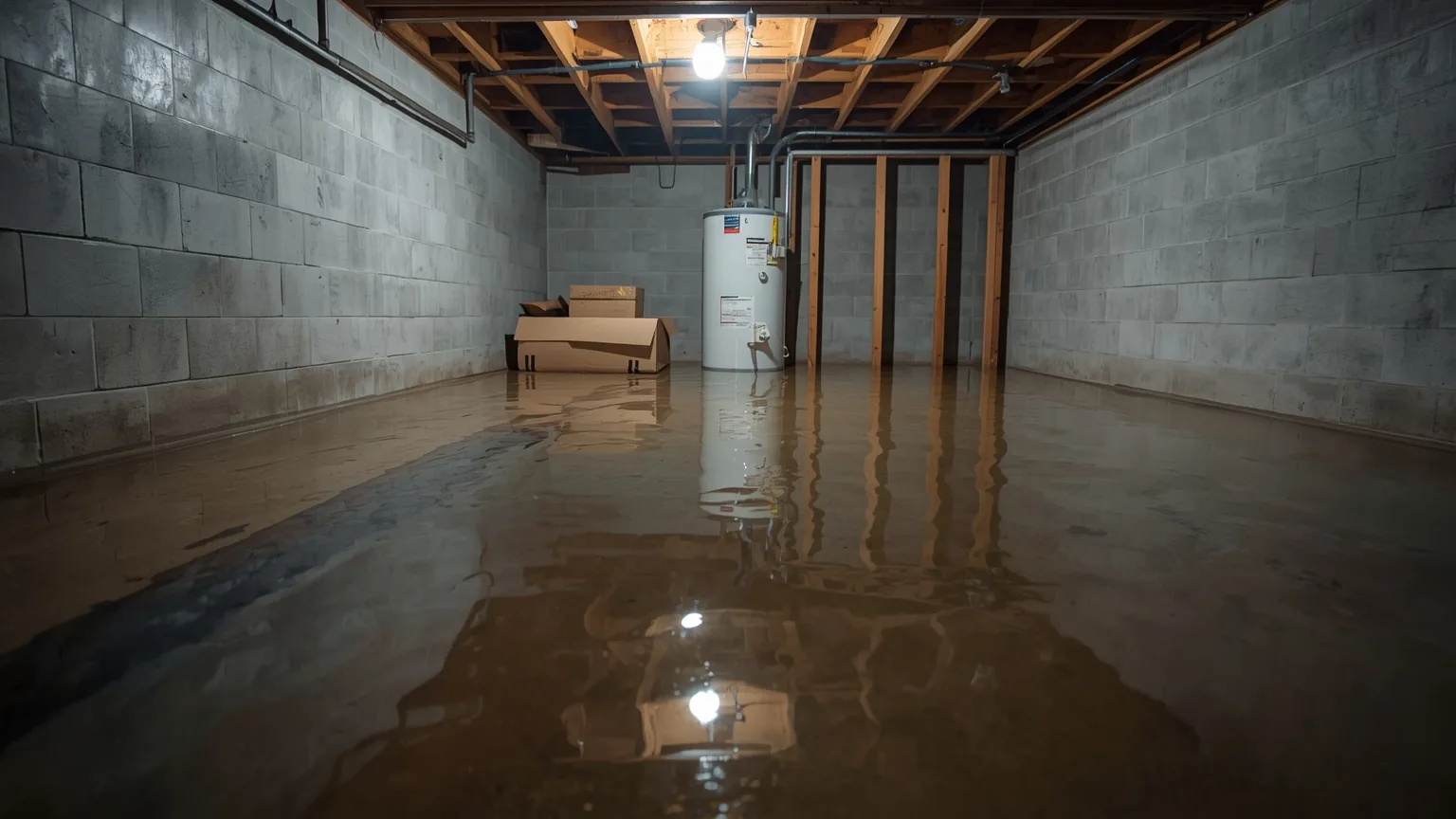
Who handles flooded basement cleanup in Des Moines, IA?
Des Moines Basements responds to flooded basements across Des Moines and Polk County — extraction and drying first, then diagnosis and permanent repair of the entry point that caused it. Call (515) 676-4747.
- Typical cost: $3,000–$12,000 in Polk County
- Soil: Clarion-Nicollet-Webster on the Des Moines Lobe — ~60% aquic, drains poorly
- Frost depth: 42" — footings and discharge lines must sit below it
- Code: Iowa Residential Code, based on the International Residential Code and adopted with Iowa amendments
- Service area: Des Moines and 9 surrounding counties, 45-mile radius
First hours
Power first. If water is near outlets, the furnace or the panel, kill the affected circuits before stepping in — and if the panel itself is threatened, that is a call to the utility, not a job for you.
Then extract and ventilate. Standing water saturates drywall, insulation and framing by the hour, and porous material has a short window before it has to be removed rather than dried. Photograph everything before you move it; documentation matters both for any insurance conversation and for what you disclose when you sell.
Then the cause
Central Iowa floods cluster in one pattern: a storm delivered more water in an hour than the lot could shed, and the water found the lowest opening. That is usually a window well without a working drain, a walkout door on the low side, or a sump that could not keep up with the inflow rate.
The fourth possibility is specific to the suburbs. Much of Ankeny, Waukee, Grimes and West Des Moines was built on former cropland that had been agriculturally tile-drained for a century. Construction routinely cuts that tile. The field still drains toward where the tile used to run — it simply has nowhere to go now, and it surfaces against whatever foundation is in the way.
Cleaning up without establishing which of the four happened guarantees a repeat with the next storm of the same size.
Why Central Iowa ground drives this
Polk County sits on the Des Moines Lobe — the youngest glacial landscape in Iowa, left by ice that retreated only about 12,000 years ago. The soils are the Clarion-Nicollet-Webster association: Clarion well drained on the rises, Nicollet somewhat poorly drained on the slopes, and Webster poorly drained in the low ground. Roughly 60 percent of the landscape is classed as aquic — wet by default.
Because the Lobe is so young, natural drainage networks have not had time to cut. Relief across much of the metro is under five metres, and water that lands here does not run to a stream — it sits until it soaks in or evaporates. Saturated till backfill can exert well over 1,000 lb of lateral force per linear foot against a foundation wall — but in Des Moines the more common failure is volume rather than pressure: more water arriving in an hour than the ground can take in a day.
Central Iowa is dotted with prairie potholes — closed depressions with no outlet at all. Most were tile-drained and built over as the metro expanded, and a house sitting in a filled pothole is sitting in a bowl. The confluence of the Des Moines and Raccoon rivers keeps the water table shallow through the older river-adjacent neighborhoods. In the older core neighborhoods the problem compounds — des moines' older neighborhoods — sherman hill, drake, beaverdale, the east village — carry a large stock of pre-1940 housing on block and rubble foundations built before perimeter drainage was required.
Flooded Basement Cleanup questions
What should I do first when my basement floods?
Kill power to the affected circuits before entering, and call the utility rather than approaching a threatened panel yourself. Then extract, ventilate and photograph before moving anything. Porous material that sat in water has a short window before removal beats drying.
Does homeowners insurance cover a flooded basement?
Usually not. Insurers treat groundwater and surface water as maintenance rather than a sudden event, and both standard exclusions apply to a storm overwhelming your lot. A burst supply line is typically covered; water coming through a window well is typically not. Sump-failure and water-backup endorsements are sold separately and are worth arranging before storm season, not after.
How fast does mold start?
Growth can begin within 24 to 48 hours given moisture and something organic. Iowa summer humidity accelerates it, which makes aggressive drying in the first two days the difference between a cleanup and a remediation job.
Why did my basement flood when the pump was working?
Almost always inflow rate rather than pump failure. A pump correctly sized for seepage can be badly undersized for a storm cell, and a discharge line without fall or with a failed check valve lets the same water return. Check the outlet first, then the check valve, then the pump.
Related emergency services
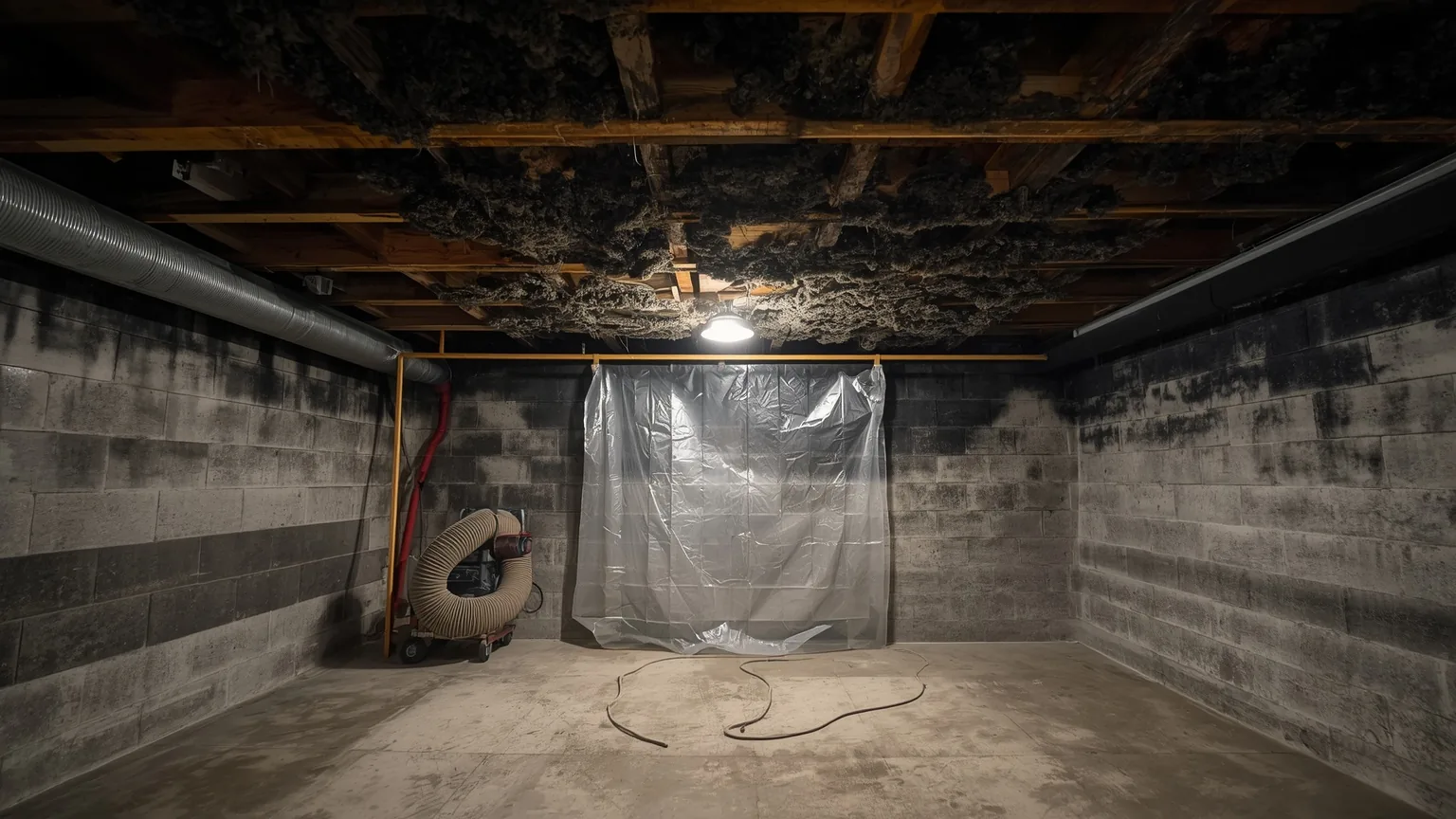
Basement Mold & Odor
Mold is a symptom with a marketing department. The organism needs water and something organic — take away the water and the problem is solved; take away only the organism and you have scheduled a repeat.

Water After Rain
How long after the rain the water appears is the most useful free diagnostic you have — and in Des Moines the answer is usually "almost immediately", which is good news.
Find out what's actually causing it.
A free on-site inspection and a written scope — before any work is quoted.