
Polyurethane foam injection in Des Moines
Two jobs, one material. Polyurethane seals a crack that is actively leaking, and it lifts a settled slab without putting weight back onto ground that already proved it could not hold the last load.
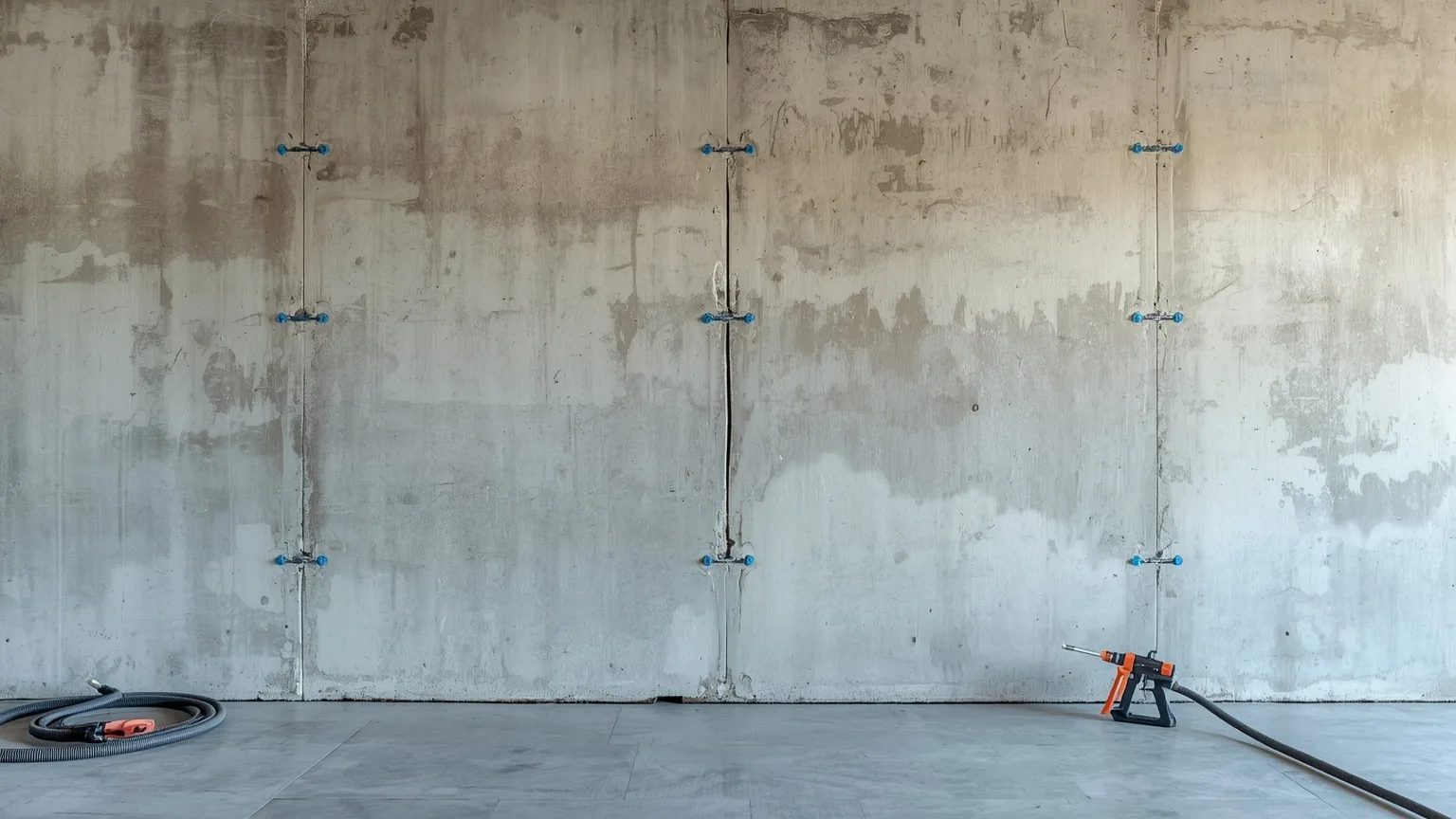
Who handles polyurethane foam injection in Des Moines, IA?
Des Moines Basements uses polyurethane foam injection in Des Moines to seal actively leaking foundation cracks and to fill voids beneath settled basement and garage slabs. Call (515) 676-4747.
- Typical cost: $400–$1,200 in Polk County
- Soil: Clarion-Nicollet-Webster on the Des Moines Lobe — ~60% aquic, drains poorly
- Frost depth: 42" — footings and discharge lines must sit below it
- Code: Iowa Residential Code, based on the International Residential Code and adopted with Iowa amendments
- Service area: Des Moines and 9 surrounding counties, 45-mile radius
Crack sealing against active water
Water is what activates it. The resin foams on contact with moisture, which is exactly wrong for epoxy and exactly right here — a crack running water is a crack epoxy will not bond to.
Flexibility is the second reason it suits Central Iowa. Backfill swells during wet stretches and contracts as it dries, and 42-inch frost depth means the wall is cycling well below grade every winter. A rigid repair across a joint that moves seasonally cracks again, usually right beside the original.
Technique is not optional. Low pressure, bottom port first, working upward, watching for resin at the next port before moving on. That progression is what fills the wall rather than the wall's surface, and it is the difference between a repair and a stripe of cured foam.
Void filling under slabs
Slabs settle when what is under them consolidates, leaving the concrete spanning a void until it cracks or drops. Foam injected through small ports expands into that void and takes the slab back toward level.
Against traditional mudjacking it has two advantages that matter particularly on this ground. It is far lighter, so it does not reload soil that already demonstrated it could not carry what was there — which is exactly the situation over a filled depression. And the injection holes are much smaller, which matters on a finished floor. It also cures in minutes, so the slab is usable the same day.
Why Central Iowa ground drives this
Polk County sits on the Des Moines Lobe — the youngest glacial landscape in Iowa, left by ice that retreated only about 12,000 years ago. The soils are the Clarion-Nicollet-Webster association: Clarion well drained on the rises, Nicollet somewhat poorly drained on the slopes, and Webster poorly drained in the low ground. Roughly 60 percent of the landscape is classed as aquic — wet by default.
Because the Lobe is so young, natural drainage networks have not had time to cut. Relief across much of the metro is under five metres, and water that lands here does not run to a stream — it sits until it soaks in or evaporates. Saturated till backfill can exert well over 1,000 lb of lateral force per linear foot against a foundation wall — but in Des Moines the more common failure is volume rather than pressure: more water arriving in an hour than the ground can take in a day.
Central Iowa is dotted with prairie potholes — closed depressions with no outlet at all. Most were tile-drained and built over as the metro expanded, and a house sitting in a filled pothole is sitting in a bowl. The confluence of the Des Moines and Raccoon rivers keeps the water table shallow through the older river-adjacent neighborhoods. In the older core neighborhoods the problem compounds — des moines' older neighborhoods — sherman hill, drake, beaverdale, the east village — carry a large stock of pre-1940 housing on block and rubble foundations built before perimeter drainage was required.
Polyurethane Foam Injection questions
What does foam injection cost?
Crack work is $400 to $1,200 each. Slab lifting is priced on area and the volume of foam the void turns out to need, which is not fully knowable until the injection starts — a small settled section is usually a few hundred to a couple of thousand dollars.
Is foam better than mudjacking?
For most residential slab work here, yes. It is lighter, so it does not reload soil that already consolidated — a real consideration over graded fill. The injection holes are much smaller and it cures in minutes. Mudjacking still has a place on large exterior slabs where weight is not a concern.
How long does polyurethane last?
The material itself is inert once cured and will not degrade. What can change is the ground. If whatever caused the original void is still happening — a leaking service line washing fines out, for instance — a new void forms beside a perfectly sound repair.
Related foundation services
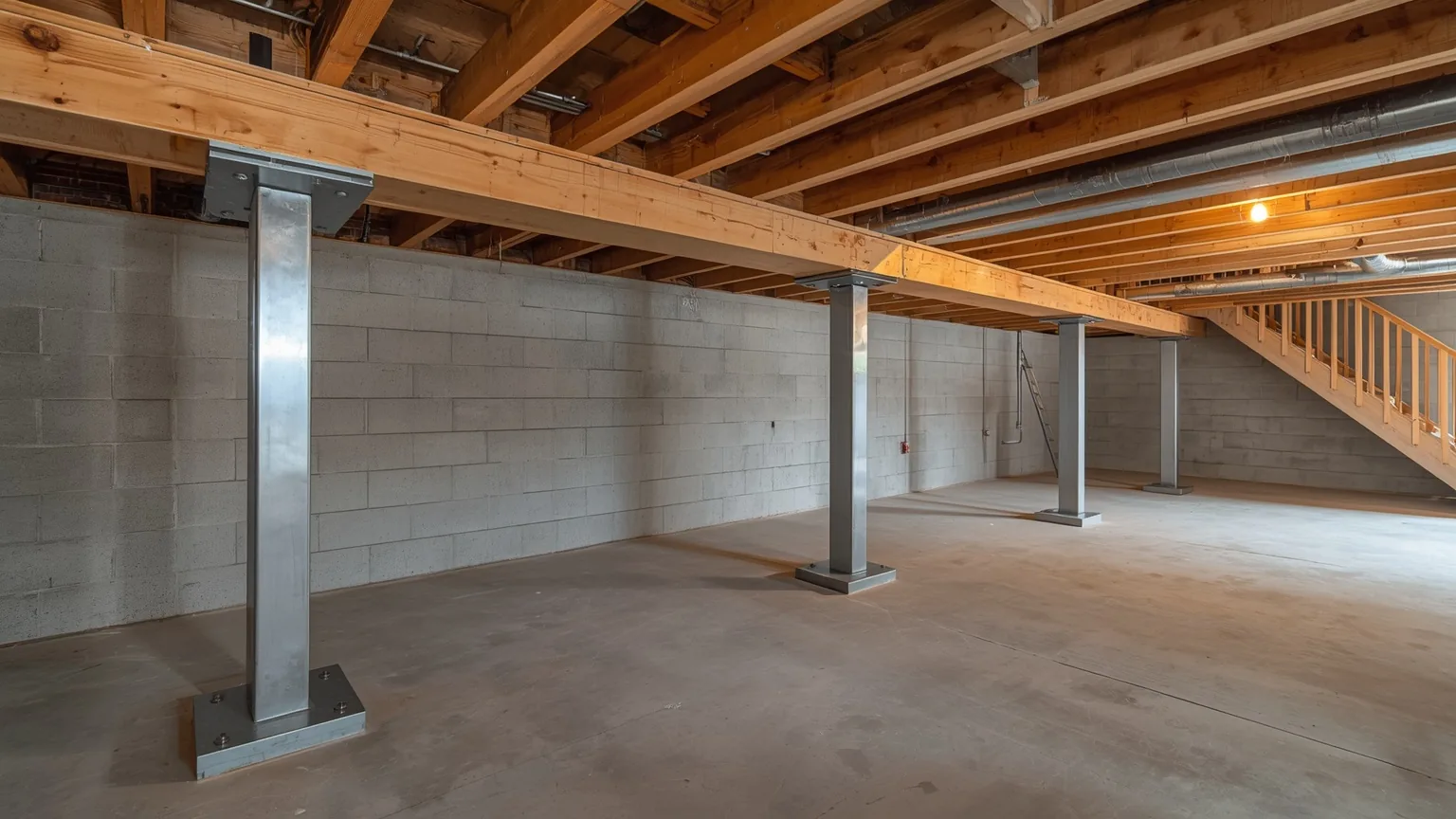
Foundation Repair
Foundation problems in Central Iowa come from two directions: lateral load from saturated till, and footings settling into ground that was never as stable as it looked.
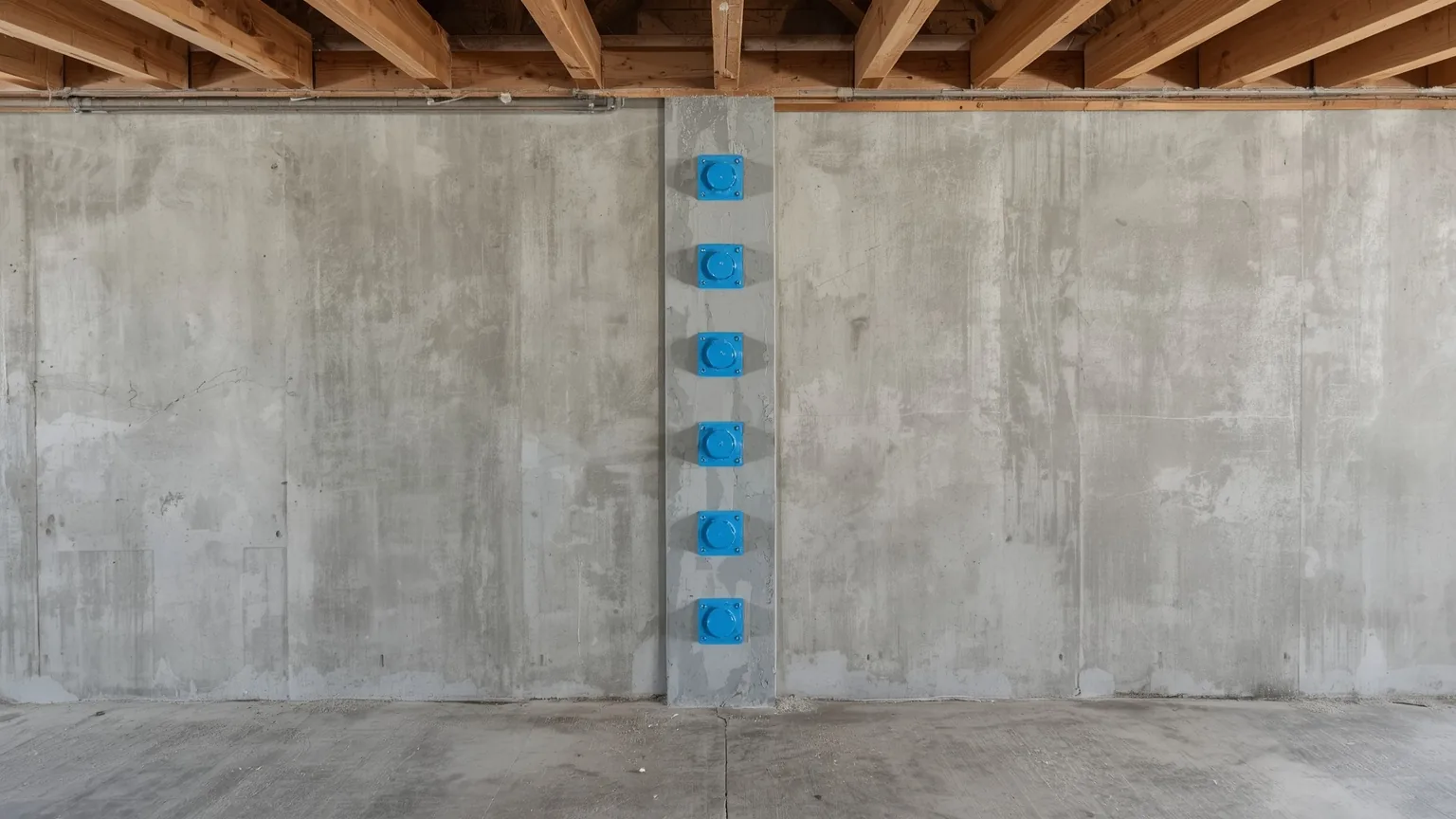
Foundation Crack Repair
Width, direction and movement tell you everything. A hairline running vertically down a poured wall is the concrete relieving its own curing shrinkage. A crack tracking horizontally along a mortar bed is the ground outside winning.
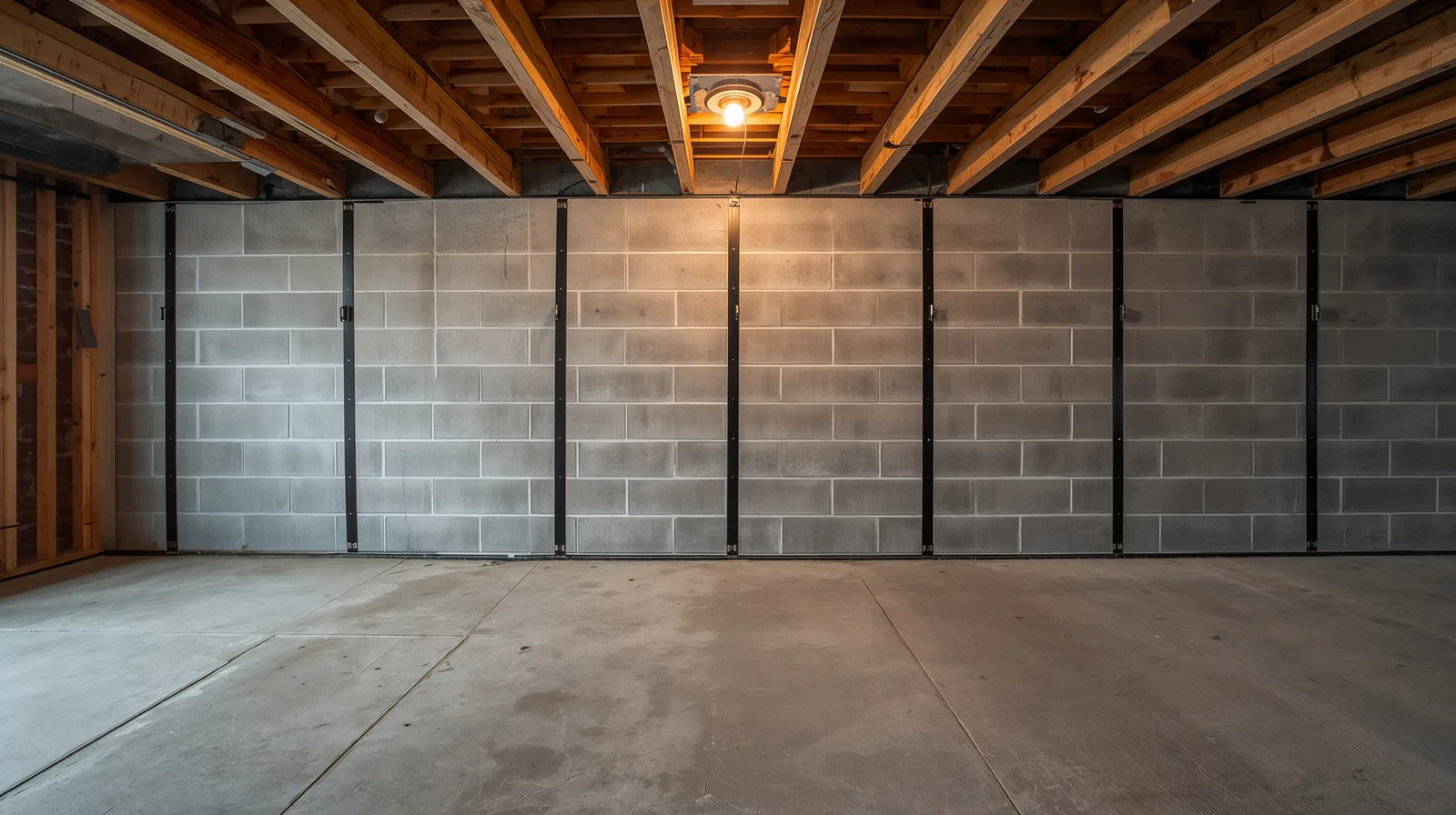
Bowing & Basement Wall Repair
A bowing basement wall means the ground outside is winning. On the Lobe the load is intermittent rather than constant — but Iowa's freeze-thaw cycle makes sure none of the ground gained is ever given back.
Find out what's actually causing it.
A free on-site inspection and a written scope — before any work is quoted.