
Interior drain tile installation in Des Moines
Interior drain tile is the workhorse repair across the Des Moines metro. It relieves pressure without touching the yard — which matters on lots where there is nowhere to send the water anyway.
Who handles interior drain tile in Des Moines, IA?
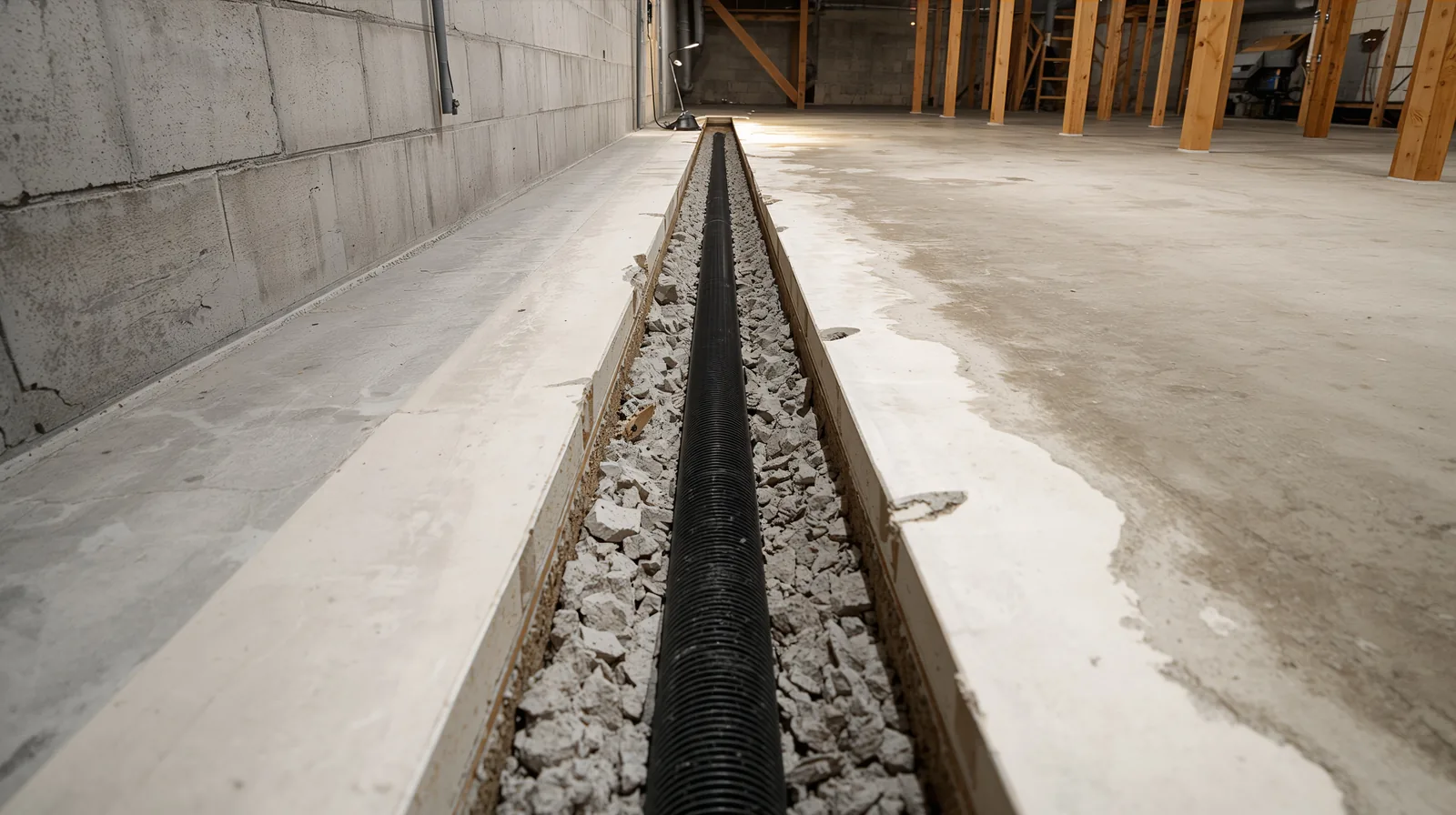
Des Moines Basements installs interior perimeter drain tile in Des Moines basements — perforated pipe set in washed stone below the slab at footing level, discharging to a sealed sump basin. Call (515) 676-4747.
- Typical cost: $5,000–$15,000 in Polk County
- Soil: Clarion-Nicollet-Webster on the Des Moines Lobe — ~60% aquic, drains poorly
- Frost depth: 42" — footings and discharge lines must sit below it
- Code: Iowa Residential Code, based on the International Residential Code and adopted with Iowa amendments
- Service area: Des Moines and 9 surrounding counties, 45-mile radius
How it is installed
The work is straightforward and disruptive in a contained way. Eight to twelve inches of the floor slab comes up around the inside of the perimeter, down to the footing. Perforated pipe goes into washed stone, pitched toward a basin. The floor is poured back. What arrives at the wall now drops into stone instead of running across your slab.
The Iowa Residential Code sets the standard through IRC R405.1: stone with no more than 10 percent passing a No. 4 sieve, extending at least 12 inches beyond the footing edge, drain top at least 6 inches above the footing, and where pipe is used, its invert no higher than the floor on 2 inches of stone with 6 inches of cover. That is a spec you can hold a quote against.
Why interior rather than exterior
Cost and disruption first. Interior work leaves the yard, drive, deck and landscaping alone, and needs no equipment access down a side yard that may be four feet wide.
The Des Moines-specific argument is the discharge. Exterior systems still have to put water somewhere, and on ground with relief under five metres there is frequently nowhere with fall. An interior system with a pump creates the head that the landscape refuses to provide — which on genuinely flat lots is not merely the cheaper option but the only one that works.
What it does not do is keep water out of the masonry. An interior system is a collection strategy, and it is the correct one for a sound wall. If the block itself is spalling or the wall has measurably moved, that is a different problem and drainage alone will not answer it.
Why Central Iowa ground drives this
Polk County sits on the Des Moines Lobe — the youngest glacial landscape in Iowa, left by ice that retreated only about 12,000 years ago. The soils are the Clarion-Nicollet-Webster association: Clarion well drained on the rises, Nicollet somewhat poorly drained on the slopes, and Webster poorly drained in the low ground. Roughly 60 percent of the landscape is classed as aquic — wet by default.
Because the Lobe is so young, natural drainage networks have not had time to cut. Relief across much of the metro is under five metres, and water that lands here does not run to a stream — it sits until it soaks in or evaporates. Saturated till backfill can exert well over 1,000 lb of lateral force per linear foot against a foundation wall — but in Des Moines the more common failure is volume rather than pressure: more water arriving in an hour than the ground can take in a day.
Central Iowa is dotted with prairie potholes — closed depressions with no outlet at all. Most were tile-drained and built over as the metro expanded, and a house sitting in a filled pothole is sitting in a bowl. The confluence of the Des Moines and Raccoon rivers keeps the water table shallow through the older river-adjacent neighborhoods. In the older core neighborhoods the problem compounds — des moines' older neighborhoods — sherman hill, drake, beaverdale, the east village — carry a large stock of pre-1940 housing on block and rubble foundations built before perimeter drainage was required.
Interior Drain Tile questions
What does interior drain tile cost in Des Moines?
Interior perimeter drain tile in Polk County runs $5,000 to $15,000 for a full perimeter including the sump. Partial runs cost proportionally less, and a finished basement adds demolition and rebuild.
Does the concrete floor get destroyed?
Only the edge. A band eight to twelve inches wide comes up around the perimeter and gets re-poured; the middle of the floor is never touched. On a bare slab the finished result is barely noticeable. On a finished floor it means the flooring along the walls comes up and goes back.
How long does interior drain tile last?
The stone and pipe should outlast the house — no moving parts, nothing to wear. The sump pump is the consumable at seven to ten years, and in Central Iowa its wear is concentrated into summer storm events. Budget for the pump, not the tile.
Will it work if my walls are also bowing?
No — and any contractor who says otherwise is selling one product for two problems. Drain tile removes the water load that caused the bowing, which stops it getting worse. Holding the wall where it is takes carbon fiber, bracing or anchors. The two belong in one scope, priced separately.
Related waterproofing services
Basement Waterproofing
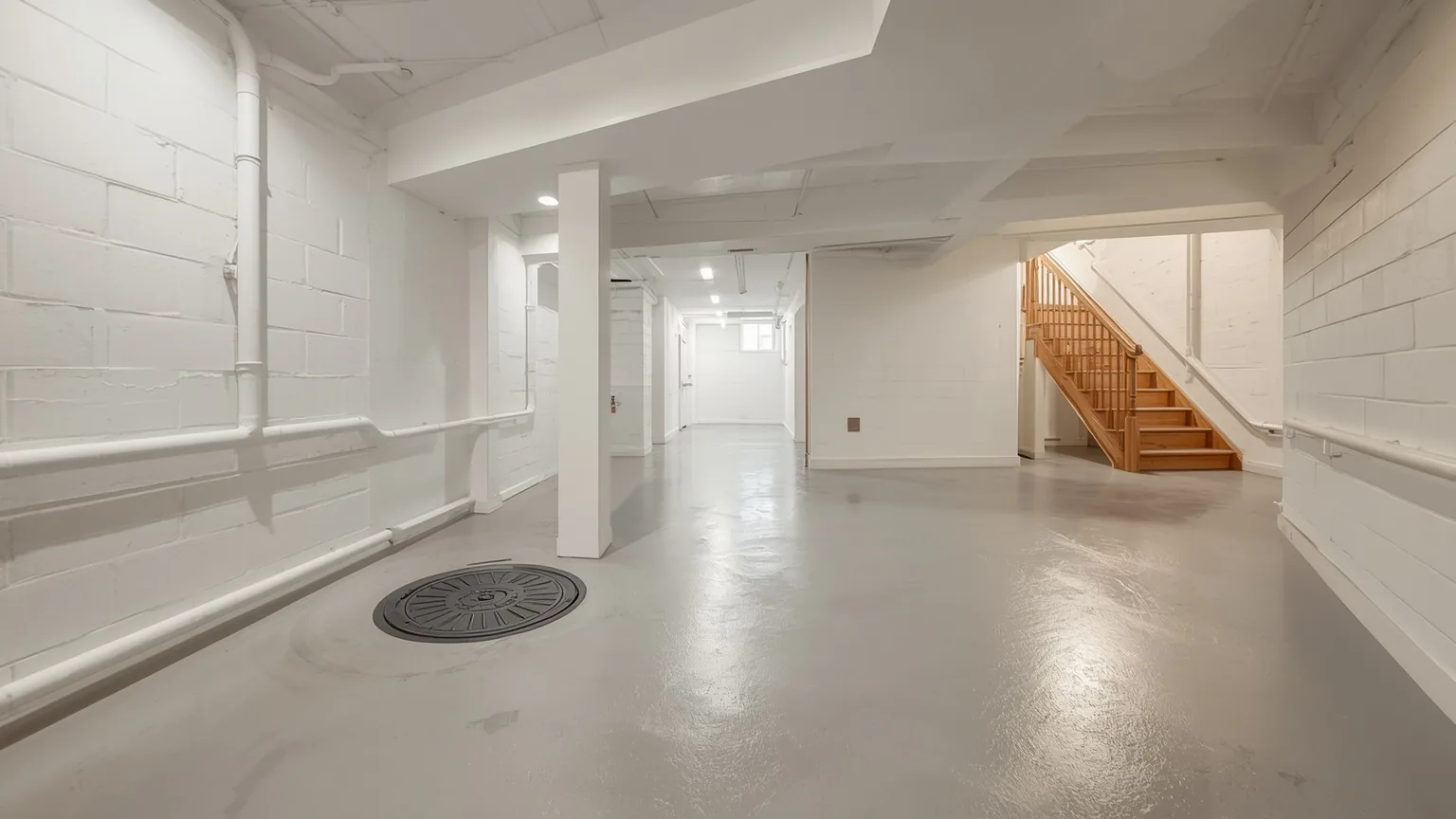
A wet Des Moines basement is usually a volume problem, not a pressure problem. Central Iowa ground is flat, young and internally drained — when a July storm drops three inches in an afternoon, the water has nowhere to go.
Wet Basement Repair
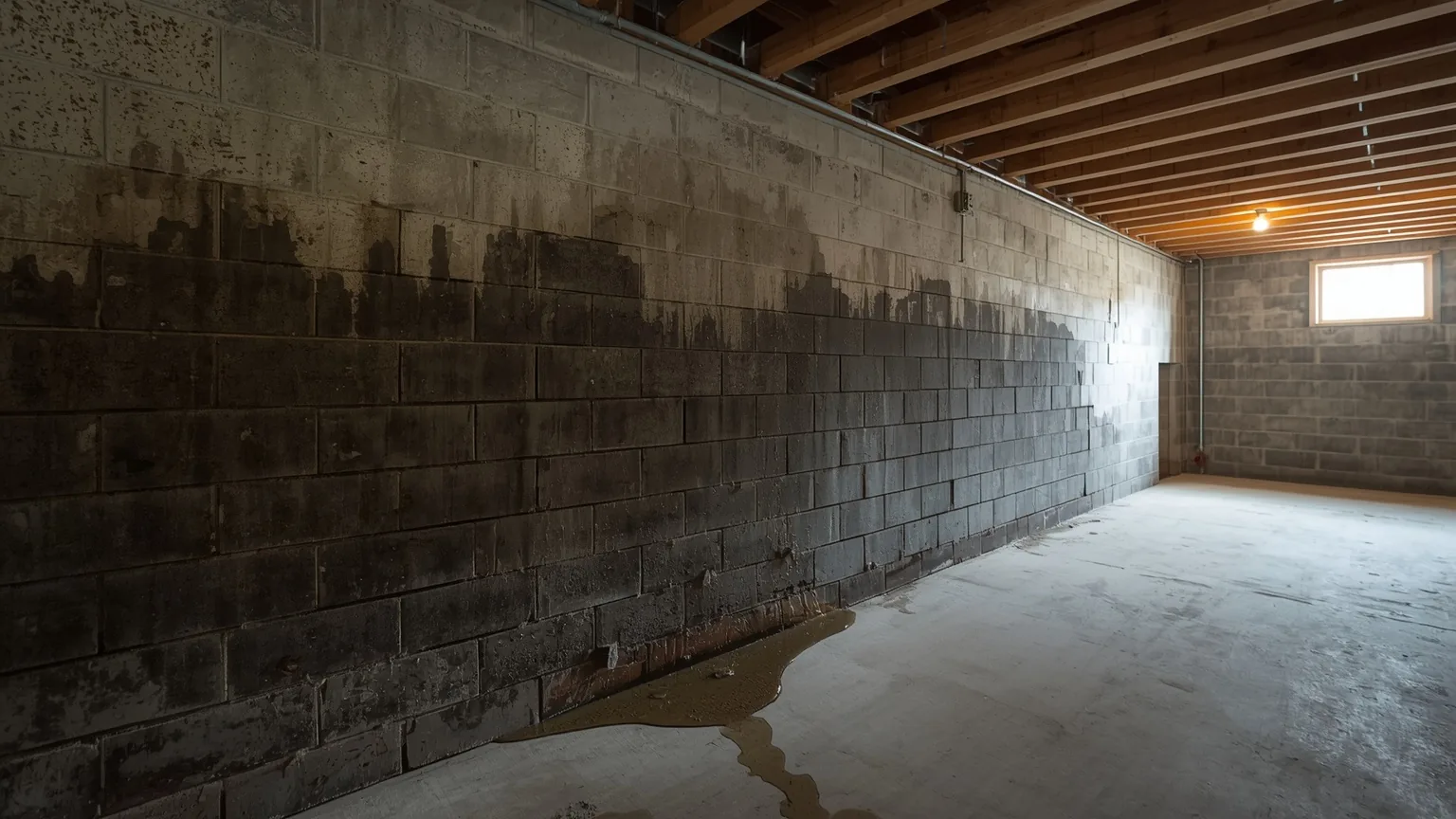
Des Moines basements leak on a trigger, and the trigger is usually a single storm. Which opening the water used decides whether the fix costs hundreds or five figures.
Exterior Basement Waterproofing
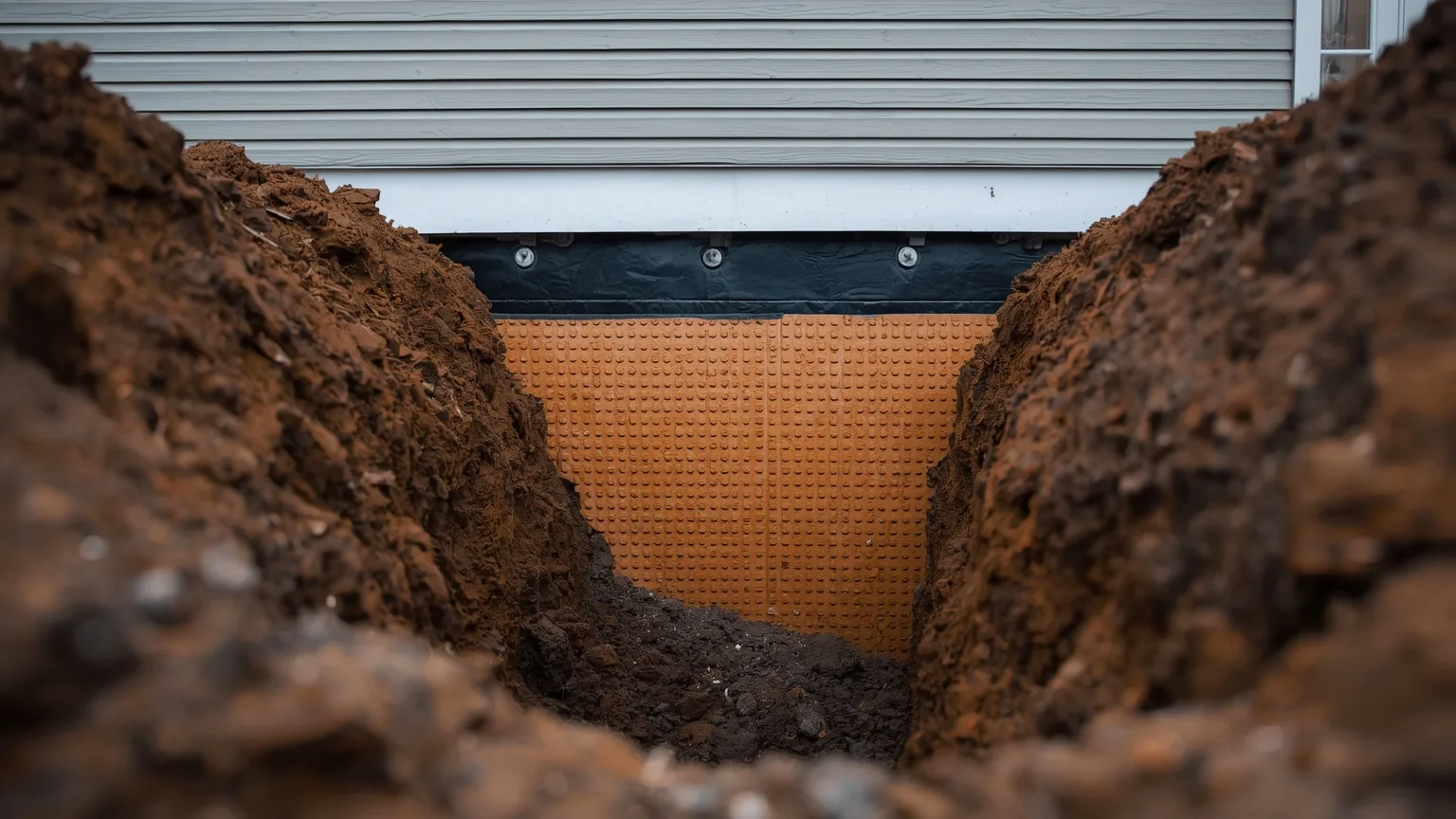
Exterior waterproofing stops water at the outside face of the wall. It is the most thorough repair available and the one most constrained by what the surrounding ground will accept.
Find out what's actually causing it.
A free on-site inspection and a written scope — before any work is quoted.