
Basement mold and musty odor in Des Moines
Mold is a symptom with a marketing department. The organism needs water and something organic — take away the water and the problem is solved; take away only the organism and you have scheduled a repeat.
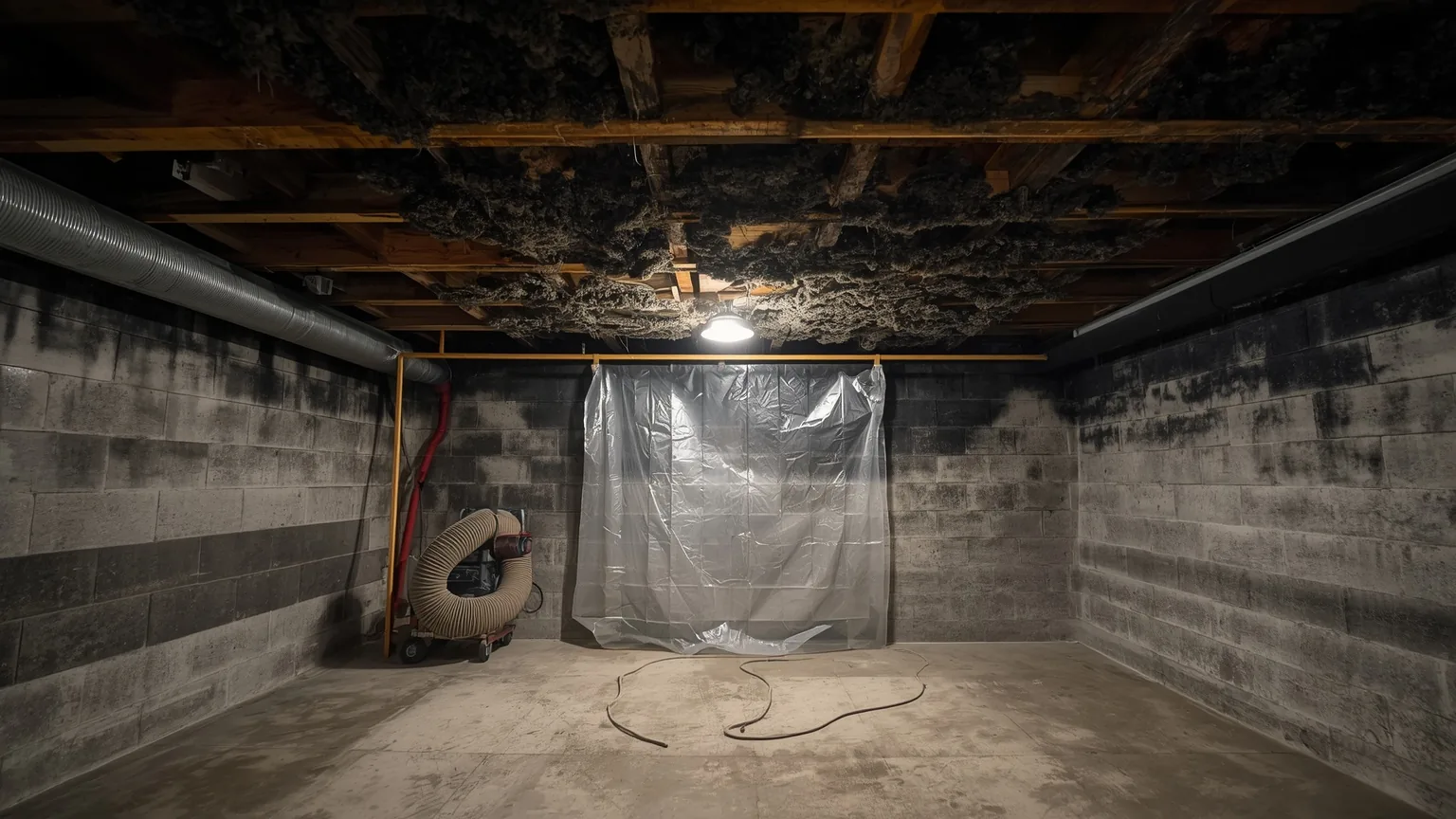
Who handles basement mold & odor in Des Moines, IA?
Des Moines Basements addresses basement mold and musty odor in Des Moines by locating and eliminating the moisture source first, then removing colonized materials and stabilizing humidity. Call (515) 676-4747.
- Typical cost: $3,000–$12,000 in Polk County
- Soil: Clarion-Nicollet-Webster on the Des Moines Lobe — ~60% aquic, drains poorly
- Frost depth: 42" — footings and discharge lines must sit below it
- Code: Iowa Residential Code, based on the International Residential Code and adopted with Iowa amendments
- Service area: Des Moines and 9 surrounding counties, 45-mile radius
Why the smell comes back
Remediation that skips the water source is a cleaning with a warranty on it. The colony returns because nothing about the conditions that grew it has changed, which is why any scope worth paying for opens with where the moisture is coming from rather than what is growing.
Iowa's summer humidity sustains growth without any liquid water at all. Relative humidity above roughly 60 percent is enough, and a cool Des Moines basement in July sits above that comfortably unless something is actively drying it. That is why basements that flooded once in June are still growing mold in September.
What has to come out
Porous material that has been wet comes out. It does not get cleaned. Drywall pulls water well above the visible tide line, batt insulation holds it indefinitely, carpet pad behaves like a sponge, and stored cardboard is simultaneously food and shelter. Block, concrete and framing lumber can be cleaned and dried where they stand.
Removal without containment turns a localised problem into a whole-house one, because disturbing a colony puts it into the air and the air is already moving upstairs. Plastic barriers, a scrubber running negative pressure, and controlled demolition are what keep it in the basement.
Then deal with the water, or none of the rest holds. Drainage if it is groundwater, a properly sized dehumidifier if it is ambient humidity, encapsulation if the source is a crawl space venting into the floor above.
Why Central Iowa ground drives this
Polk County sits on the Des Moines Lobe — the youngest glacial landscape in Iowa, left by ice that retreated only about 12,000 years ago. The soils are the Clarion-Nicollet-Webster association: Clarion well drained on the rises, Nicollet somewhat poorly drained on the slopes, and Webster poorly drained in the low ground. Roughly 60 percent of the landscape is classed as aquic — wet by default.
Because the Lobe is so young, natural drainage networks have not had time to cut. Relief across much of the metro is under five metres, and water that lands here does not run to a stream — it sits until it soaks in or evaporates. Saturated till backfill can exert well over 1,000 lb of lateral force per linear foot against a foundation wall — but in Des Moines the more common failure is volume rather than pressure: more water arriving in an hour than the ground can take in a day.
Central Iowa is dotted with prairie potholes — closed depressions with no outlet at all. Most were tile-drained and built over as the metro expanded, and a house sitting in a filled pothole is sitting in a bowl. The confluence of the Des Moines and Raccoon rivers keeps the water table shallow through the older river-adjacent neighborhoods. In the older core neighborhoods the problem compounds — des moines' older neighborhoods — sherman hill, drake, beaverdale, the east village — carry a large stock of pre-1940 housing on block and rubble foundations built before perimeter drainage was required.
Basement Mold & Odor questions
Why does my basement smell musty even though it's dry?
Because something is still holding moisture even if the floor looks dry — carpet pad, the back face of finished walls, framing behind drywall, stored cardboard. Iowa summer humidity alone will also sustain growth with no liquid water present, which is why a basement that dried out in June can still smell in August.
Can I just clean the mold myself?
A small patch on block or concrete, yes, with a respirator and gloves. Anything spread across a surface, hidden behind finish, or growing on something porous needs containment first — disturbing it releases spores into an airflow that runs directly up into the house. And none of it addresses the water.
Will waterproofing fix the smell?
Usually, if water was the cause and the affected porous material is removed. Once the source is cut and the space dries, the odor generally goes. If it persists in a dry basement, either something is still holding moisture or summer humidity is high enough on its own to need a dehumidifier.
Related emergency services
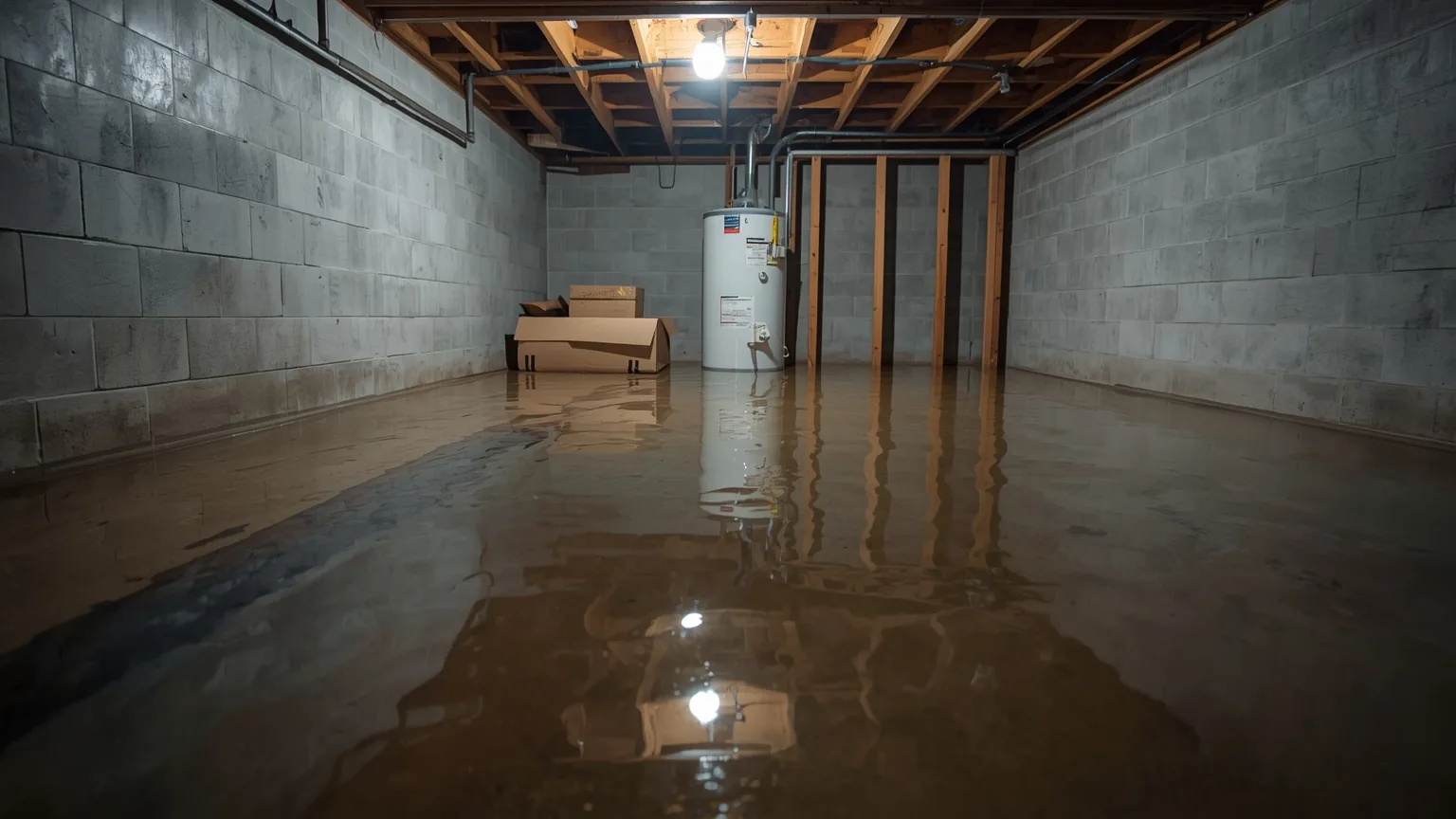
Flooded Basement Cleanup
In Des Moines a flooded basement is usually a storm event, not a slow seasonal failure. It arrives in an afternoon, and what you do in the first few hours decides how much of it you keep.
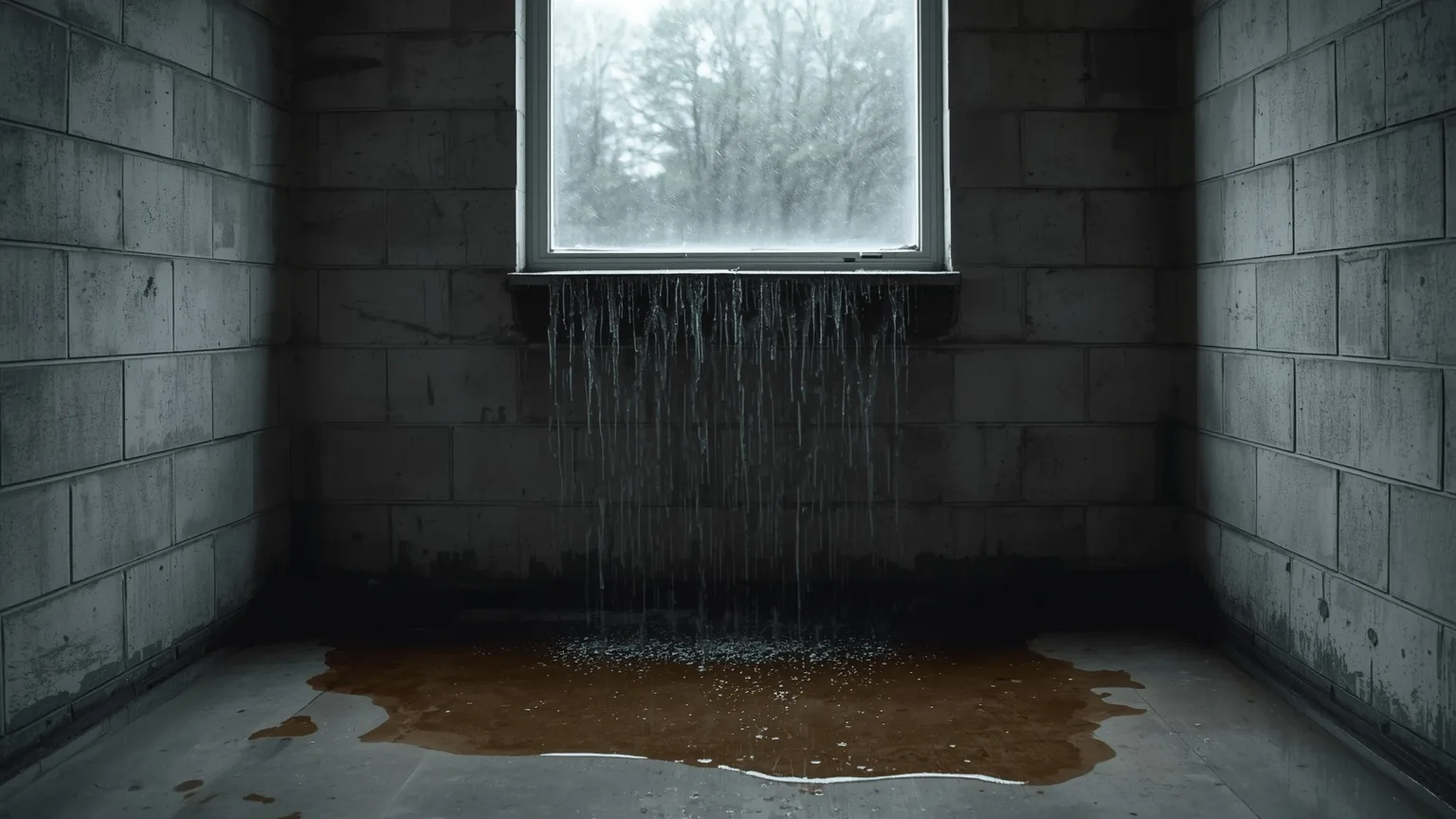
Water After Rain
How long after the rain the water appears is the most useful free diagnostic you have — and in Des Moines the answer is usually "almost immediately", which is good news.
Find out what's actually causing it.
A free on-site inspection and a written scope — before any work is quoted.