
Vapor barrier installation in Des Moines
There is no leak to find and no puddle to photograph. Bare ground under a house releases moisture as vapor continuously, and in an Iowa July that load lands in the rooms above as clammy air an air conditioner cannot dry.
Who handles vapor barrier installation in Des Moines, IA?
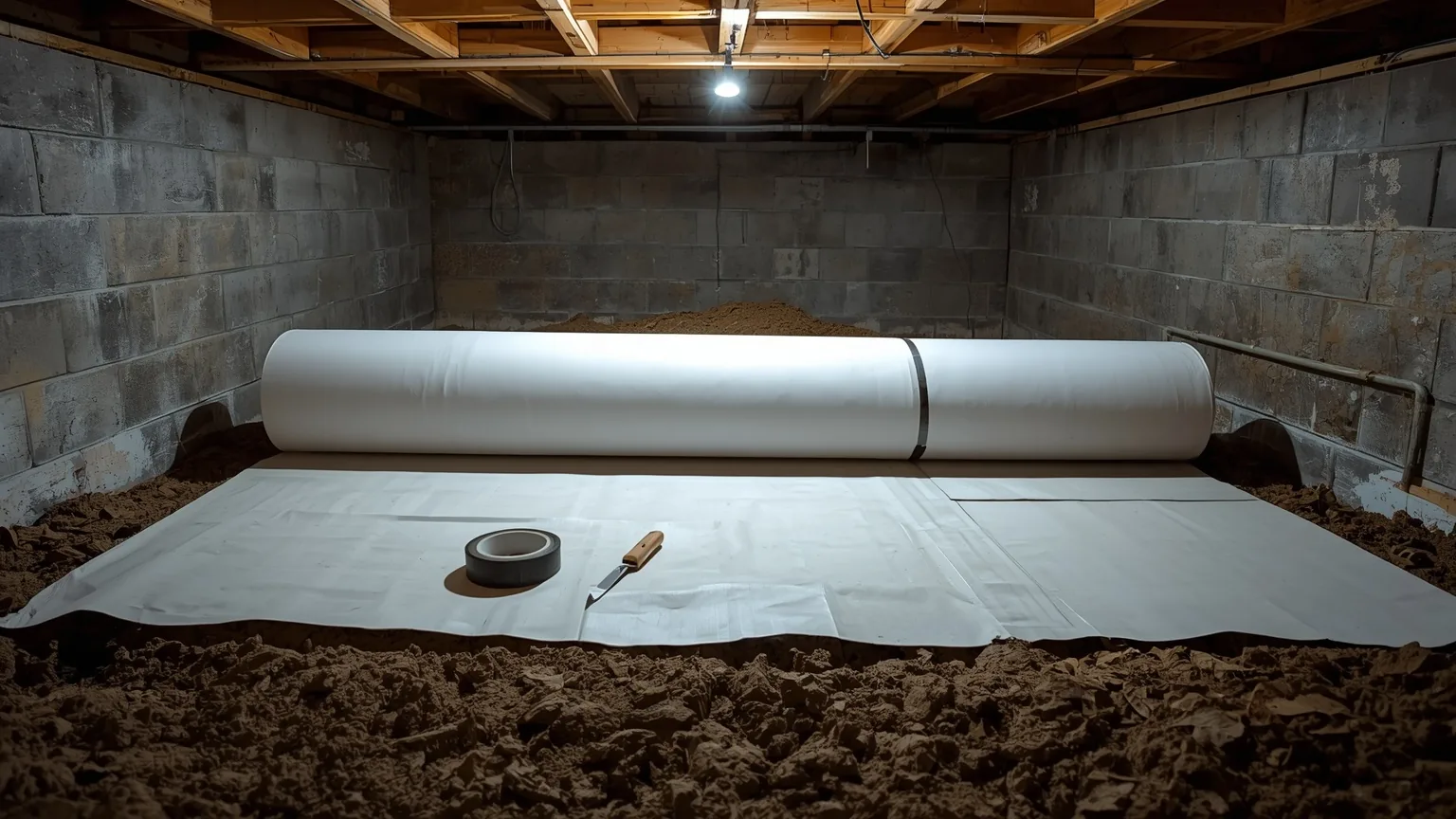
Des Moines Basements installs sealed vapor barriers in Des Moines basements and crawl spaces — reinforced liner across soil and up walls, seams taped, to stop ground moisture entering the structure. Call (515) 676-4747.
- Typical cost: $400–$4,000 in Polk County
- Soil: Clarion-Nicollet-Webster on the Des Moines Lobe — ~60% aquic, drains poorly
- Frost depth: 42" — footings and discharge lines must sit below it
- Code: Iowa Residential Code, based on the International Residential Code and adopted with Iowa amendments
- Service area: Des Moines and 9 surrounding counties, 45-mile radius
Vapor is not the same as water
Vapor and water are separate problems with separate fixes. A crawl space can be bone dry underfoot and still be the single largest moisture source in the building, because soil gives off water as gas around the clock and uncovered ground can release gallons a day.
Iowa summers make it worse. High outdoor dew points mean the air already carries a heavy moisture load before the ground adds to it, and a cool basement is where that air condenses. The symptom usually appears as clammy upstairs air and an air conditioner running long cycles without the house feeling dry.
Specification matters
Specification is where these succeed or fail. Six-mil builder's poly tears while it is being installed and punctures the first time anyone crawls on it. Reinforced liner in the 10 to 20 mil range survives, and if the space will be entered for storage or utility access at all, take the heavier end.
Coverage has to be unbroken to mean anything. Ground, walls, taped seams, mechanically fastened and sealed at the top edge. Vapor does not respect a sheet with gaps around the perimeter — it simply travels around it, and the barrier becomes decoration.
One warning for wet ground: laid over saturated soil, a liner traps water underneath instead of excluding it. Where groundwater is present the barrier is installed alongside drainage and a sump, never as a substitute for them.
Why Central Iowa ground drives this
Polk County sits on the Des Moines Lobe — the youngest glacial landscape in Iowa, left by ice that retreated only about 12,000 years ago. The soils are the Clarion-Nicollet-Webster association: Clarion well drained on the rises, Nicollet somewhat poorly drained on the slopes, and Webster poorly drained in the low ground. Roughly 60 percent of the landscape is classed as aquic — wet by default.
Because the Lobe is so young, natural drainage networks have not had time to cut. Relief across much of the metro is under five metres, and water that lands here does not run to a stream — it sits until it soaks in or evaporates. Saturated till backfill can exert well over 1,000 lb of lateral force per linear foot against a foundation wall — but in Des Moines the more common failure is volume rather than pressure: more water arriving in an hour than the ground can take in a day.
Central Iowa is dotted with prairie potholes — closed depressions with no outlet at all. Most were tile-drained and built over as the metro expanded, and a house sitting in a filled pothole is sitting in a bowl. The confluence of the Des Moines and Raccoon rivers keeps the water table shallow through the older river-adjacent neighborhoods. In the older core neighborhoods the problem compounds — des moines' older neighborhoods — sherman hill, drake, beaverdale, the east village — carry a large stock of pre-1940 housing on block and rubble foundations built before perimeter drainage was required.
Vapor Barrier Installation questions
Do I need a vapor barrier if my basement is dry?
If the space has exposed soil, yes. Dry refers to liquid water; vapor is separate and continuous, and bare ground can put gallons a day into the air. In an Iowa summer that load shows up as clammy upstairs air and an air conditioner working harder than it should.
What thickness should be used?
Ten to twenty mil, reinforced. The 6 mil sheet sold as a vapor barrier at most suppliers is a construction convenience, not a permanent installation — it tears going in. The price gap between the two is small next to the labour of redoing it.
Does a vapor barrier replace waterproofing?
No. It stops vapor and does nothing about liquid water under pressure, and over wet ground it can trap moisture beneath itself. Where groundwater is present it is one part of a system that also needs drainage and a pump.
Related basement services
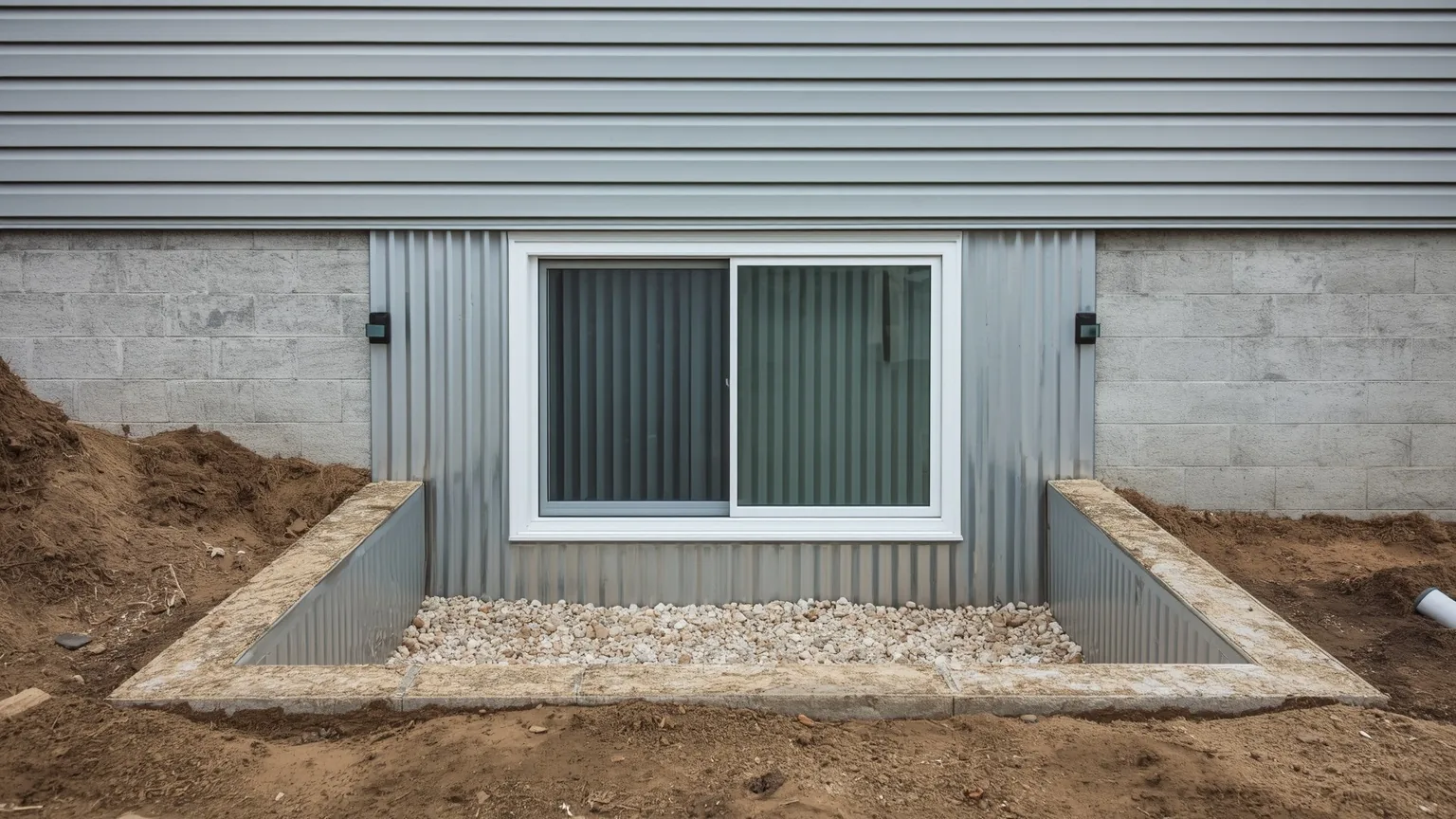
Egress Window Installation
A basement bedroom without a compliant escape opening is not a bedroom — not for the fire code, not for the permit file, and not on the disclosure form when you sell.
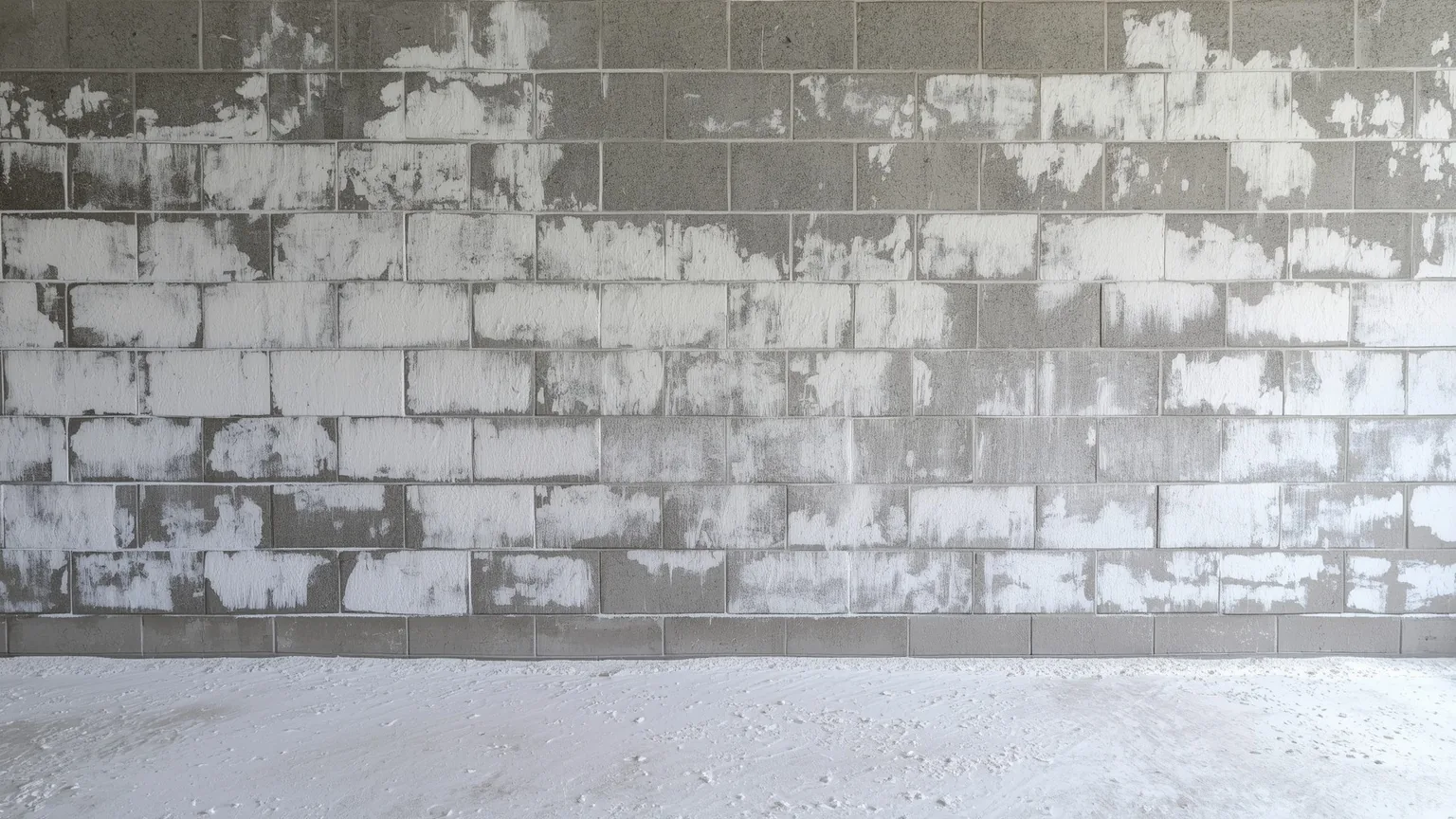
Efflorescence & Wall Staining
Nothing is growing on your wall. That white crust is salt the water left behind on its way through the block — harmless in itself, and one of the more useful diagnostic signals a basement offers.
Find out what's actually causing it.
A free on-site inspection and a written scope — before any work is quoted.